
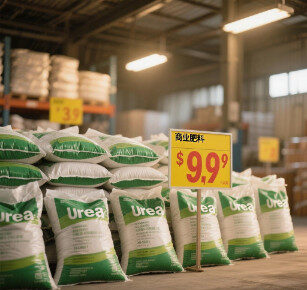
As of July 8, 2025, the domestic urea market in China exhibits a complex landscape of mixed price movements across various regions. This market’s volatility is influenced by supply and demand, logistics issues, and the impact of the futures market.
Regional Price Trends and Market Dynamics
In eastern regions such as Shandong and Jiangsu, prices are stable to slightly weak. Prices in Shandong for small- to medium-sized granules range from ¥1,760 to ¥1,820 per ton, with a slight decrease of ¥20 per ton (e.g., Linyi delivery at ¥1,820 and Heze at ¥1,800). Prices in Jiangsu remain stable, with a premium for industrial-grade urea reflecting subdued industrial demand in these areas.
In contrast, northern regions such as Shanxi and Shaanxi have experienced modest price increases of ¥10 to ¥30 per ton. In Shanxi, the price of small- to medium-sized granules ranges from ¥1,680 to ¥1,720 per ton, while in Shaanxi, the range is from ¥1,640 to ¥1,730 per ton (Xianyang delivery is ¥1,750). These hikes are primarily driven by temporary logistics constraints that limit supply availability.
However, southwestern regions, particularly Sichuan, have seen a sharp decline of ¥60/ton, with prices falling to ¥1,720–¥1,760/ton due to significant inventory pressure. Similarly, Heilongjiang’s northeastern region saw prices drop by ¥20/ton to around ¥1,750–1,770 due to reduced agricultural activity during the monsoon season.
Supply-Demand Imbalance and Cost Factors
The market’s supply and demand dynamics continue to be a key influence. Daily urea production is at 19.63 million tons, with operating rates at 83.52%, resulting in an ample supply. On the demand side, industrial demand from the resin and adhesive sectors has softened due to seasonal factors, while agricultural demand remains weak. Furthermore, compound fertilizer plants are increasingly favoring alternative nutrients, which weakens urea demand.
In terms of costs, coal prices have stabilized, alleviating upward pressure on production costs. However, regional logistics disruptions in northwestern China have temporarily supported prices in Shanxi and Shaanxi. Conversely, aggressive discounting in Sichuan (- ¥60/ton) reflects an inventory buildup, forcing sellers to cut prices to clear stock.
Futures Market Influence
Urea futures showed mixed signals on July 8. The main contract (UR2509) opened at ¥1,745/ton and settled at ¥1,757/ton, marking an increase of ¥11/ton (0.63%). Analysts anticipate continued range-bound trading between ¥1,700 and ¥1,800/ton in the near term, indicating market uncertainty.
Price Outlook and Key Considerations
Over the next seven to ten days, stable-to-weak prices are likely to persist in eastern and northern China within the ¥1,750–1,850/ton range. Southwestern regions may see further corrections if inventories remain high. Export markets will be pivotal, with quota policies determining price direction.
Key monitoring factors include:
- Monsoon Progression: In regions like Heilongjiang and Sichuan, the timing of agricultural urea application hinges on weather conditions.
- Coal price movements: Any fluctuations in coal prices could affect production economics.
- Industrial Recovery: The revival of demand in the resin and plastics sectors will impact non-agricultural urea consumption.
- Government Stockpiling: Potential government interventions could stabilize prices by absorbing the surplus supply.
A Cautious Mid-Season Market
The July 8 urea market reflects typical mid-season characteristics: adequate supply, fragmented demand, and pronounced regional price divergence. While northern logistics constraints provide temporary support, broader demand weakness persists. Markets await clarity on autumn fertilizer preparations, international price trends, and export quota policies.
Traders should adopt flexible inventory strategies, and producers should consider adjusting their output to prevent oversupply in regions like Sichuan. The late July period, when compound fertilizer plants finalize their plans for the fall, will be pivotal in determining the market’s trajectory moving forward.