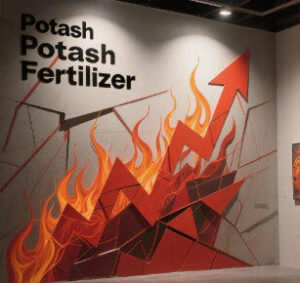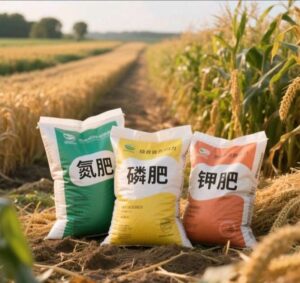
In an unprecedented regulatory move, China imposed an emergency export ban on small-pack fertilizers, freezing international shipments of critical nutrients and sparking uncertainty in global agricultural markets. As of July 25, 2025, customs authorities halted inspections for all fertilizer packages weighing 10 kg (22 lbs) or less, targeting what officials term the “systemic exploitation” of policy loopholes in nitrogen and phosphorus exports. This move affects products under HS code 31051000, including urea blends, MAP/DAP phosphates, potassium chloride mixes, and NPK compounds. It marks a radical departure from prior policies and reflects China’s determination to protect its strategic resources.
The Trigger: Skyrocketing Exports and Systemic Loophole Exploitation
The ban’s urgency was fueled by staggering export growth statistics. From January to June 2025, China’s exports of small-pack fertilizer surged by 387.8% year-on-year, totaling 2.18 million tons—three times historical averages. In June alone, the monthly volume reached 761,300 tons, marking a 412% increase and surpassing seasonal norms by fivefold. These exports contained 580,000 tons of phosphate, equivalent to 12% of China’s annual quota in just six months. “This wasn’t about volume; it was a coordinated evasion of export controls,” revealed an anonymous Ministry of Agriculture analyst. Companies fragmented bulk NPK shipments into retail-sized packages to circumvent the strict 280,000-ton quota for large exports. By relabeling restricted fertilizers as “consumer products,” companies exploited a critical vulnerability in China’s regulatory system, enabling unlimited small-pack exports.
The Loophole Mechanisms: A Three-Pronged Evasion Strategy
The suspension revealed a complex network of tactics that allowed exporters to exploit the system:
- Quota Evasion: While there were stringent caps on bulk NPK (280k tons in 2025), shipments of small packages were unrestricted. Exporters repackaged restricted fertilizers as retail goods to bypass quotas.
- Price Arbitrage: Domestic urea prices were capped at 1,880 yuan per ton, while international markets offered 390–400 USD per ton FOB. Small-pack premiums offset repackaging costs, creating lucrative profit margins.
- Supply Chain Manipulation: Products were routed through multiple transshipment points and obscured by opaque end-user records and misdeclared nutrient content. This obfuscation hid the true scale of exports and evaded regulatory oversight.
Global Ripple Effects: Disrupted Supply Chains and Food Security Risks
Industry experts warn that the ban could reduce China’s fertilizer exports by 35–40% annually, reshuffling global trade flows. As a major supplier of nitrogen, phosphorus, and potassium blends, halting small-package production will put a strain on the market’s reliance on these inputs. Shortages are imminent in regions such as Southeast Asia, Africa, and Latin America, where small-scale farmers depend on affordable packaged fertilizers. “Resource protection is vital, but this ban risks exacerbating food insecurity,” cautioned John Smith, an agricultural economist at the International Food Policy Research Institute. “Supply disruptions could lead to diminished crop yields, higher input costs, and ultimately, global food price hikes.”
Beyond the Ban: China’s Regulatory Overhaul and Geopolitical Shifts
The suspension, which is set to last until at least October 2025, is a precursor to deeper reforms. China’s agricultural policy review in December is expected to introduce stringent new measures, including: – AI-powered inspections, blockchain traceability, revised classification criteria to block loopholes However, achieving this will require international collaboration to prevent exports via third countries, a challenge given the fertilizer trade’s complex networks. Meanwhile, competitors in Europe, North America, and the Middle East are poised to seize market share by accelerating regional production capacity.
Industry Adaptation Amid Uncertainty
Producers and traders are scrambling to navigate the new landscape. “We’re pivoting to bulk export partnerships or establishing local production hubs to mitigate shortages,” said a representative from a global agribusiness firm. Smaller exporters, however, grapple with logistical hurdles and rising costs. The ban’s long-term impact is still up for debate. While it curtails illicit exports, it also reveals China’s dependence on small-pack shipments. This dependence may lead to accelerated domestic reforms or geopolitical shifts in agricultural trade.
Conclusion: A Crucial Crossroads for Resource Sovereignty and Global Food Production
China’s small-pack fertilizer ban is more than a regulatory crackdown—it’s a geopolitical statement on resource sovereignty. By dismantling the evasion tactics that exploited loopholes, Beijing intends to balance domestic supply with international obligations. However, the ban’s effectiveness in addressing these issues depends on technological innovation and global regulatory coordination. As the world awaits permanent reforms in December, farmers, traders, and policymakers confront a delicate equation. Can China protect its resources without destabilizing global food production? The answer will influence agricultural geopolitics for years to come.