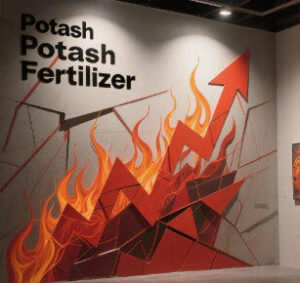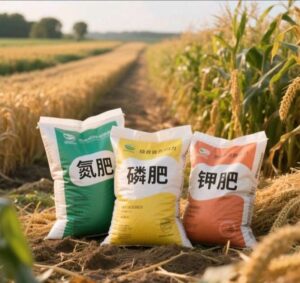
On July 21, 2025, China’s State Development & Investment Corporation (SDIC) took a major step in reshaping the nation’s potash industry by merging SDIC Mining and SDIC Trading to form SDIC Industry Holdings Limited. This development is the third significant state-led consolidation in China’s potash sector this year, after Zijin Mining acquired Tibet Summit Resources and China Salt Lake Group was formed. As China accelerates its efforts to strengthen domestic potash production and supply chain resilience, SDIC Industry’s entry into the market signifies a new phase of industry consolidation and global ambition. This reflects a broader national strategy to enhance food security, reduce reliance on imports, and establish China as a competitive force in the global potash market.
SDIC Industry’s Strategic Roadmap: A Three-Pronged Approach
SDIC Chairman Fu Gangfeng’s directives outline a strategy for achieving dominance, diversification, and integration. These interconnected objectives serve as a foundation for one another:
1. Dominance in Potash Industry: Building an Unrivaled Supply Chain
SDIC aims to control every aspect of potash operations, from extraction to global distribution. This vertical integration aligns with China’s goal of reducing its reliance on imports, especially from regions susceptible to geopolitical disruptions. A critical component of this strategy is reinforcing its grip on the Xinjiang Lop Nur Potash Company, China’s premier sulfate of potash (SOP) producer. Xinjiang’s salt lake resources account for a significant portion of domestic production, making this control essential. SDIC also plans to strengthen partnerships with international companies, such as the Jordan Arab Potash Company. This approach balances domestic production with global supply channels and technological collaboration. This dual strategy of domestic consolidation and international cooperation aims to create a resilient, diversified potash ecosystem.
2. Diversified Operations: Synergies Across Industries
SDIC Industry will leverage its subsidiaries to expand into complementary sectors beyond potash. For instance, Beijing Tongyizhong New Materials (SH: 688722) will spearhead innovations in advanced materials and potentially incorporate potash-related technologies into valuable applications. SDIC Jincheng Metallurgy will expand its non-ferrous metals operations, creating synergies with potash processing, particularly in byproduct utilization. Through portfolio diversification, SDIC Industry aims to mitigate risks and enhance operational efficiencies. Integrating metals and potash extraction, for example, optimizes resource utilization, reducing waste and costs. Additionally, existing commercial subsidiaries will consolidate to establish robust global trading networks and ensure the efficient distribution of potash and related raw materials.
3. Integrated Supply Chain Development: Securing the Future
To safeguard national food security, SDIC Industry will prioritize logistics and reserves. Plans include establishing a comprehensive national potash logistics system and developing strategic buffer stocks. These measures aim to mitigate supply chain risks and ensure emergency response capacity. At the same time, SDIC will optimize production across its salt lake assets by integrating advanced extraction technologies to increase efficiency and output. By streamlining operations, SDIC seeks to maximize yields and minimize environmental impact, thereby aligning with China’s sustainability goals. This integrated approach, combining logistics, reserves, and technology, ensures long-term supply stability, which is critical for a country where potash is essential for agricultural productivity.
Navigating a Transformative Landscape: China’s Potash Consolidation Wave
SDIC Industry’s launch occurs amid an unprecedented period of industry restructuring. Two prior consolidations set the stage:
- Zijin Mining’s acquisition of Tibet Summit Resources: By securing a 26.18% stake, Zijin gained control over Qarhan Salt Lake’s annual Potassium Chloride capacity of 200,000 tons. Integrating copper and potash operations created synergies in resource extraction and processing.
- Formation of China Salt Lake Group: Consolidating three major producers yielded a 530,000-ton-per-year Potassium Chloride capacity and world-class lithium byproduct recovery capabilities. This positioned the group as a global competitor in both potash and lithium.
SDIC Industry’s entry builds on these precedents, adding a new layer of state-backed scale and ambition. Together, these consolidations reflect China’s push to centralize control, enhance efficiency, and build geopolitical resilience in the potash sector.
Implications and Future Outlook
China’s aggressive potash consolidation has far-reaching implications.:
- Food security: By securing domestic supply chains, China aims to protect its agricultural productivity, which is essential to its population’s food supply.
- Global Competition: State-backed giants like SDIC Industry are positioning themselves to compete with traditional players, such as Canada’s Nutrien and Russia’s Uralkali, in international markets. This could potentially reshape pricing dynamics.
- Sustainability and technology: Consolidation enables large-scale investment in green extraction technologies and circular economy practices, which addresses environmental concerns.
- Geopolitical Hedging: Diversified supply sources and reserve systems reduce vulnerability to disruptions in key importing regions in response to recent global supply chain uncertainties.
As SDIC Industry integrates its assets, streamlines operations, and expands globally, it will likely become a pivotal player in shaping both domestic and international potash markets. China’s consolidation wave is not just about restructuring the industry—it is a strategic move to secure its agricultural future and establish itself as a dominant force in a critical global commodity.