The global potash market has shown signs of resilience in recent weeks, with prices remaining steady despite minor fluctuations. According to the latest data from the week ending August 26, 2025, spot prices for potassium chloride (KCl) have shown mixed but balanced movements, reflecting regional supply and demand. In Vancouver, FOB KCl prices range from $296 to $334 per ton, with the upper limit decreasing by $1.
Similarly, in Northwest Europe, prices range from $303 to $403 per ton, with both limits experiencing minor declines of $1 and $2, respectively. The Baltic/Black Sea region remained stable at $294-$314/ton, while Israel reported a $2 increase at the lower end ($312-$396/ton). Key importing regions, such as Southeast Asia ($370-$390/t CFR) and Brazil ($360-$365/t CFR), also remained unchanged.
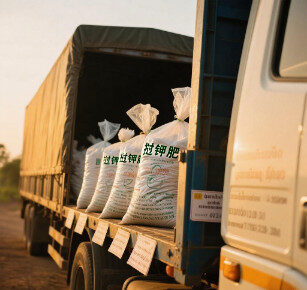
While global prices indicate a cautious equilibrium, a significant development is taking shape in Southeast Asia. Chinese mining giant Fortune Source Mining Holdings plans to open a new potash production facility in Laos’s Vientiane region in late 2026. Initially targeting an annual output of 250,000 to 300,000 tons, the project marks a pivotal expansion in the country’s nascent potash industry. Having started its 5-million-ton potassium chloride project in Laos in 2010, Fortune Source has obtained all the necessary government approvals and is moving forward with construction plans, undeterred by recent regulatory changes.
The company’s ambitions extend beyond the initial phase, aiming to scale production to 1 million tons per annum by 2027. Its export strategy hinges on China and Southeast Asia, potentially leveraging Vietnamese ports for shipping or utilizing the China-Laos Railway to access Yunnan and southeastern Chinese markets. This logistics advantage could enhance competitiveness in the region, where transportation costs significantly impact pricing dynamics.
Fortune Source’s entry will join an already growing roster of Chinese-backed projects in Laos. Yuntianhua’s Ruiyuanfeng facility commenced production at 500,000 tons per year in late 2024, while Yasha International has completed equipment tests for two 1-million-ton projects and is advancing underground mining operations. Lao Kaiyuan is awaiting a mining permit for its second 1-million-ton expansion, and Zangge Potash secured licenses for its Vientiane project in early 2025, though construction timelines remain pending.
The influx of Chinese investments aligns with Laos’ strategy to capitalize on its estimated 1.4 billion tons of potash reserves, second only to Canada and Russia globally. As these projects come online, Laos is poised to disrupt traditional supply chains dominated by Canada, Russia, and Belarus. While China remains the world’s largest potash importer, these domestic investments could reduce reliance on external sources, potentially influencing global pricing power dynamics. However, market analysts caution that infrastructure challenges and geopolitical factors may still impact production timelines and export efficiency.
Despite these developments, the immediate global potash market is expected to remain steady. The International Fertilizer Association (IFA) forecasts stable demand from agriculture-driven regions such as Brazil and Southeast Asia, offsetting potential supply additions from Laos. Price volatility may emerge if geopolitical tensions affect key producers or if logistics constraints hinder new Asian supplies. Nevertheless, the long-term shift toward diversified production sources could gradually reshape the market’s balance of power, with Laos emerging as a key player in the Asia-Pacific fertilizer supply chain.