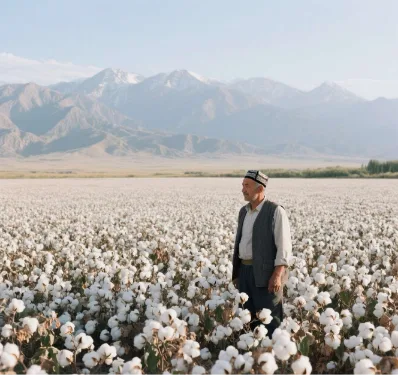
As the critical late stages of China’s 2025 cotton production season approach, the Ministry of Agriculture and Rural Affairs (MARA) is collaborating with the National Agricultural Technology Extension Service Center and the Cotton Expert Guidance Group to implement a meticulously designed management strategy. This strategy aims to optimize yields, enhance fiber quality, and mitigate risks in various agro-ecological regions. This year’s strategy incorporates advanced agronomic practices, digital technologies, and regionalized solutions to overcome climate challenges, pest pressures, and market demands. This initiative targets sustainable productivity and standardized harvests, positioning China as a global leader in precision cotton farming.
Key Regionalized Technical Strategies
1. Northwest Inland Cotton Region (Xinjiang and the Hexi Corridor):
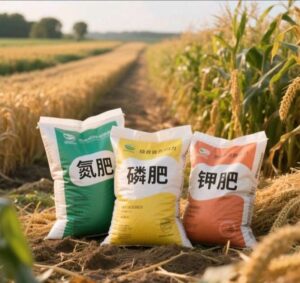
Water and Fertilizer Management: Drip irrigation and fertigation systems are applied three times during the late season to maintain soil moisture at 60%, balancing plant vigor and preventing stress. Fertilization focuses on balanced NPK ratios, applying 30–40 kg/mu of micronutrient blends (zinc and boron) to promote boll development. This approach aligns with the region’s arid climate and water scarcity challenges.
Premature Senescence Prevention: Foliar sprays containing urea (1–2%), potassium hydrogen phosphate (KH₂PO₄) (0.3–0.5%), and micronutrients are applied as needed to promote plant health and avoid excess nitrogen. This strategy counters the early decline that is common in high-density planting systems.
Pest and Disease Control: Post-rain monitoring targets boll diseases, such as anthracnose and angular leaf spot, using fungicides, such as carbendazim 50% WP at 100–150 g/acre. Green control methods include biopesticides and pheromone traps for spider mites, thrips, and whiteflies.
Defoliation and Ripening: Defoliants (thidiazuron + ethephon) are applied when 40% of the bolls have opened on sunny days above 20°C. Northern Xinjiang begins spraying in late August, and southern regions start by September 10–15 to ensure a timely harvest.
Harvesting Excellence: Mechanical harvesting requires ≥85% defoliation, ≤12% moisture content, and cleared fields of drip lines and plastic residue. Manual harvesting requires the use of cotton-only accessories to prevent contamination.
2. Yellow River Basin Cotton Region:
Disaster Resilience: After the rains in August and September, the fields are drained within 24 hours to prevent lodging and boll rot. Lodged plants are gently propped up with soil, and fungicide sprays containing 25% pyraclostrobin (at a rate of 30–40 ml per acre) protect lower bolls. This strategy mitigates the region’s vulnerability to heavy rainfall.
Foliar nutrition: With declining root systems, potassium hydrogen phosphate (KH₂PO₄) at 0.2–0.3% and micronutrient sprays are applied every 5–7 days, two to three times. Drone spraying integrates pest control with nutrient delivery, enhancing efficiency.
Targeted Pest Management: Threshold-based spraying targets cotton mirids and beet armyworms through unified control. Chemical interventions, such as emamectin benzoate, are used for cotton bollworm outbreaks exceeding ten larvae per 100 plants.
Ripening and harvesting: Ethephon is applied for manual harvests 20 days before frost. For mechanical harvests, ethephon and thidiazuron are used when ≥60% of the bolls have opened. Harvesting is concentrated after spraying to minimize the impact of weather. Pre-frost and post-frost cotton are separated for quality grading.
3.Yangtze River Basin Cotton Region:
Water and Drought Adaptation: Clear drainage systems mitigate typhoon-related flooding. After waterlogging, foliar polyoxin (10% WP, 50–100 g/acre) or oligosaccharins can control boll rot. Drought-stressed areas use precision irrigation (furrow or drip) to avoid midday heat and address the region’s unpredictable weather.
Integrated Pest Management (IPM): Whiteflies, beet armyworms, and cotton bollworms are managed using bio-attractants, sex pheromones, and biopesticides. Drone spraying ensures precise coverage for large-scale control.
Plant Growth Regulation: Foliar sprays of urea and potassium hydrogen phosphate (KH₂PO₄) are applied before September. Boron and zinc deficiencies are corrected with water-soluble blends (note: avoid mixing ZnSO₄ with KH₂PO₄). Lower leaves and empty branches are removed to improve ventilation during boll opening.
Harvesting protocol: Bolls are harvested 7–10 days after cracking. Foreign fiber contamination is prevented by using equipment dedicated to cotton only. Harvested cotton is segregated by quality (e.g., pre- or post-frost) for differentiated market entry.
Supportive Ecosystem
China’s framework integrates:
- Tech-enabled precision: drones for real-time monitoring and variable-rate spraying, as well as soil moisture sensors that optimize irrigation.
- Training and extension: MARA collaborates with local cooperatives to train farmers on mechanization, green pesticides, and digital tools.
- Green Inputs Promotion: The government incentivizes the adoption of biostimulants, IPM-compatible chemicals, and energy-efficient harvesters.
Implications for Ag Inputs Stakeholders:
This year’s strategy highlights:
- Emerging demand for micronutrient blends, IPM-compatible biopesticides, defoliant-ripening formulations, and moisture sensors.
- Market opportunities: International suppliers of precision spraying equipment, drones, and smart sensors are well-positioned for collaboration.
- Sustainability Alignment: China’s shift toward eco-friendly inputs aligns with global regulatory trends and could influence supply chain partnerships.
Future Trends & Directions
Looking beyond 2025, China’s cotton production is set to evolve along three key trajectories:
- Full integration of digital agri-tech: AI-driven pest prediction models, IoT-driven irrigation, and blockchain traceability systems will become standard, enhancing transparency and efficiency.
- Expansion of mechanization and automation: Autonomous harvesters, robotic weeders, and AI-guided spraying will replace manual labor in high-density regions like Xinjiang.
- Sustainable Input Innovation: Research investments in bio-based fungicides, drought-resistant cotton varieties, and circular plastic recycling technologies will strengthen China’s position as a leader in green cotton.
China’s 2025 cotton management strategy demonstrates its commitment to precision farming, regional adaptability, and sustainable practices. As global cotton markets prioritize quality and traceability, these advancements will position China as a reliable supplier of high-quality fiber and create opportunities for ag tech innovators worldwide.