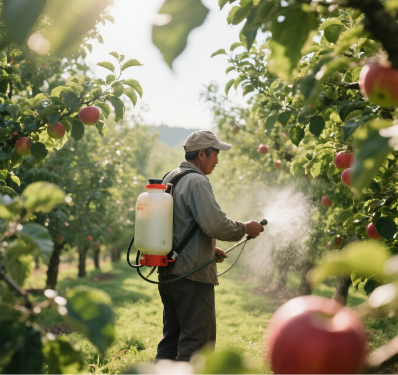
The 39th China Plant Protection Information Exchange and Pesticide & Machinery Trade Fair, approved by the Ministry of Agriculture and Rural Affairs and organized by the National Agricultural Technology Extension Service Center (NATESC), opened in Nanchang on November 21. During the keynote session, Zeng Juan, Director of the Pest and Disease Forecasting Division of NATESC, released the national plant protection and quarantine information for 2025–2026 and projected key pesticide and machinery demand trends for 2026.
Key Crop Threats to Monitor in 2026
Director Zeng highlighted major crop diseases, pests, and invasive species requiring heightened attention in 2026, based on ongoing quarantine risk analysis, joint regulatory efforts, and resistance monitoring:
-
Wheat: Fusarium head blight, crown rot, stripe rust, sharp eyespot, and aphids.
-
Rice: Rice stem borer, brown planthopper, rice leaf roller, sheath blight, and rice blast.
-
Corn: Fall armyworm, armyworm, cotton bollworm, corn borer, southern rust, and ear rot.
-
Other Threats: Red imported fire ant, citrus greening, soybean phytophthora root rot, pear fire blight, farmland weeds, and rodent infestations.
Pesticide Demand Projections
Chemical pesticide use in China is expected to stabilize in 2026, with increased demand for low-toxicity chemicals, herbicides, plant growth regulators, and bio-pesticides.
1. Insecticides & Acaricides
In addition to thiamethoxam, which is expected to see significant growth in usage, the following insecticides will remain critical:
-
Dichlorvos, lime sulfur, imidacloprid, phoxim, petroleum oil, pymetrozine, trichlorfon, chlorpyrifos (restricted), and dimehypo.
2. Fungicides
Alongside pyraclostrobin, key fungicides include:
-
Copper sulfate, dithiocarbamates (e.g., mancozeb), carbendazim, thiophanate-methyl, tebuconazole, tricyclazole, chlorothalonil, prochloraz, and isoprothiolane.
3. Herbicides
Beyond glyphosate and glufosinate, major herbicides in demand will be:
-
Acetochlor, atrazine, butachlor, bentazone, metolachlor, MCPA, and pretilachlor.
4. Plant Growth Regulators
Key regulators include:
-
Ethephon, paclobutrazol, mepiquat chloride, gibberellic acid, thidiazuron, uniconazole, brassinolide, and diethyl aminoethyl hexanoate (DA-6).
5. Bio-Pesticides
Bio-pesticides gaining prominence for 2026 include:
-
Jinggangmycin, Bacillus thuringiensis (Bt), abamectin, emamectin benzoate, kasugamycin, Bacillus subtilis, gibberellins, spinetoram, and nucleopolyhedrovirus (NPV).
Trends in Application Machinery
While new weeding machinery and targeted application robots are developing rapidly, the growth in plant protection drone inventories and operational coverage is projected to slow.
Green Initiatives for 2026
Director Zeng emphasized NATESC’s commitment to:
-
Promoting simplified, efficient, and economically viable green pest control technologies.
-
Expanding the “Three Bio-Based Initiatives” (biological control in fields, orchards, and greenhouses).
-
Integrating green control with unified pest management.
-
Accelerating the adoption of new pesticides, technologies, and machinery.
-
Implementing the “Million Farmers Scientific Pesticide Training” program to enhance on-field guidance.