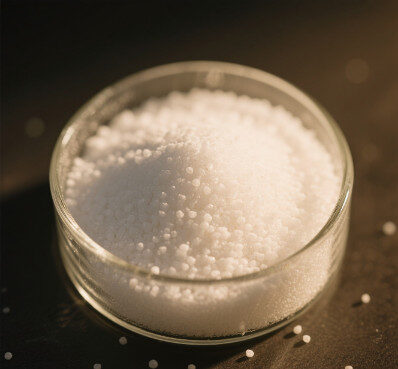
As the world’s largest producer and consumer of urea, China’s urea sector entered 2025 amid a dual shift of accelerated capacity expansion and policy recalibration. The industry is experiencing a critical transition from pure scale growth to quality and efficiency-driven competition, marked by a clear contrast between continuous supply-side expansion and structural changes in demand, further intensified by a reshaping global trade landscape.
Supply Side: Accelerated Capacity Release and Evolving Competitive Landscape
China’s urea capacity expansion reached a new peak in 2025, continuing a cycle that began after the conclusion of supply-side reforms around 2020. This expansion is characterized by significant technological upgrades.
From 2022 to 2024, China’s urea output increased by 9.58 million tons, a growth of 17%, far exceeding the global average of 9% and accounting for over half of the world’s incremental production. Most of this growth came from coal-based urea, but with notable internal shifts: output from advanced entrained-flow gasification technology surged by 9.85 million tons (two-thirds from coal-water slurry gasification, one-third from pulverized coal gasification), while fixed-bed gasification output declined by 1.25 million tons. Fluidized-bed output remained largely flat. Gas-based urea contributed 1.2 million tons (13% of the growth), comprising 650,000 tons from natural gas-based processes and 550,000 tons from coke oven gas-based processes.
In 2024, the commissioning of multiple new-generation coal gasification units (e.g., Yankuang Luneng, Anhui Quansheng, Henan Yanhua) pushed total national capacity to 77.21 million tons. Annual output reached 65.93 million tons, with coal-based urea constituting 76% (50.36 million tons) and gas-based urea 24% (15.56 million tons). This coal-centric energy structure provides a significant cost advantage amid relatively low coal prices.
This capacity is translating directly into output. From January to August 2025, national urea output hit 48.14 million tons, a 13.38% year-on-year increase. With an estimated September output of 5.71 million tons and assuming a similar operating rate to 2024, full-year 2025 output could reach a record 71 million tons.
This capacity surge is accompanied by technological advancement. New coal gasification technologies are steadily replacing older, less efficient capacities. Bituminous coal-based urea capacity has already reached 40.19 million tons, contributing to lower industry-wide production costs.
The expansion has also crystallized a tiered competitive structure. First-tier leaders like Henan Xinlianxin, Ruixing Group, Hualu Hengsheng, and Shanxi Tianze each boast capacities exceeding 2 million tons. Second-tier players with 1-2 million tons capacity include Yangmei Chemical, Sanning Chemical, Hubei Yihua, Lutianhua, and Lanhua Sci-Tech. Enterprises with sub-1 million ton capacity form the third tier.
Regionally, the industry exhibits a pattern of “North China leading, East China following, and Northwest China rising.” Provincially, Shandong, Shanxi, Xinjiang, Inner Mongolia, and Henan rank top five in capacity, collectively accounting for over 50% of the national total, indicating heightened regional concentration.
Demand Side: Agricultural Demand as the Pillar and Strategic Export Adjustments
Domestic demand remains the core pillar for urea consumption, with the agricultural sector accounting for 65.35% of usage, displaying strong seasonality.
The traditional peak fertilizer season from March to October dictates market rhythms: top-dressing for winter wheat in the north kicks off in early March; rice fertilization in the northeast follows in May; peak top-dressing for corn in the north and rice in the south occurs from June to July; and base fertilization for winter wheat in the north takes over from September to October. Typically, March-April accounts for about 20% of annual agricultural urea use, June-July for about 50%, and September-October for another 20%.
From January to August 2025, domestic urea consumption reached 47.30 million tons, a 10.86% year-on-year increase. While growth persists, volatile agricultural product prices have led to high inventory levels at compound fertilizer enterprises (sample enterprises held 826,200 tons), prompting a cautious “produce-to-order” strategy. This has resulted in smaller, shorter-term urea procurement orders, dampening concentrated demand releases.
The export market has undergone a strategic shift from strict control to targeted regulation. China’s role in global urea trade is evolving from a “volume exporter” to a “strategic regulator,” a move that addresses global supply chain restructuring while creating space for domestic technological upgrading and quality improvement.
Policy-wise, 2024 saw exports limited to 250,000 tons to prioritize domestic supply. Starting 2025, China implemented a urea export quota system, releasing four batches totaling nearly 5 million tons for the year. Each quota announcement provided some market support, with the fourth batch in November being a key driver for a price rally at that time.
This policy is reshaping China’s export structure: prioritizing aid-based exports to countries like Pakistan and Myanmar with weaker agricultural foundations; increasing supply of automotive-grade urea to premium markets like South Korea and Japan; and leveraging technical barriers (e.g., small packages under 10 kg in new customs codes) to achieve differentiated export models.
Market Performance: Price and Inventory Pressures in a Loose Supply-Demand Environment
The mismatch between expanding supply and subdued demand is directly reflected in price and inventory trends.
Fundamentally, the market from 2024 into 2025 has been characterized by a sustained downward and volatile trend, primarily driven by the prolonged “strong supply, weak demand” dynamic, compounded by export policy adjustments. While there were periodic fluctuations in H1 2024, a trend of decline set in during H2 2024 and continued through 2025, with prices repeatedly touching multi-year lows.
The third quarter of 2025 was a typical case: industry operating rates recovered to over 81%, with daily output breaking the 200,000-ton mark. However, downstream procurement remained sluggish due to a “wait-and-see” mentality. Even with more low-priced offers available, new orders were thin, leading to continuous inventory build-up. High stock levels exacerbated price pressure, with low-end prices for mainstream small-granule urea nearing the cost line in some regions twice.
Cost disparities among production technologies provide varying degrees of resilience. Data shows that gas-based and fixed-bed urea processes have significantly higher production costs than modern entrained-flow gasification. The persistent price decline in recent months has deepened losses for gas-based and fixed-bed producers, with reported losses exceeding 200 RMB/ton, leaving little room to withstand further drops. The pronounced cost advantage of coal-based urea (especially entrained-flow) is a key driver behind the ongoing capacity tilt towards this technology.
Conclusion: At a Crossroads
In 2025, China’s urea industry stands at a crossroads between scale expansion and quality enhancement.
-
On the supply side, the gradual release of 6.4 million tons of new capacity will intensify competition, making technological advancement and cost control critical for survival.
-
On the demand side, while agricultural demand provides a fundamental floor, tepid industrial demand recovery and export policy constraints present dual pressures.
-
In the market, the loose supply-demand balance is unlikely to reverse soon, suggesting prices may continue oscillating near cost levels.
Looking ahead, the industry’s opportunities lie in three directions:
-
Technological iteration: Wider adoption of new coal gasification processes will further solidify cost advantages.
-
Demand upgrading: Markets for high-end products like automotive urea are poised for continued expansion.
-
Export optimization: Strategic supply to Belt and Road partner countries and breakthroughs in premium markets could open new avenues.
Finding the equilibrium between capacity growth and supply-demand balance, and building dual strengths in both the domestic and international arenas, will be the defining challenge for China’s urea industry in the coming years.