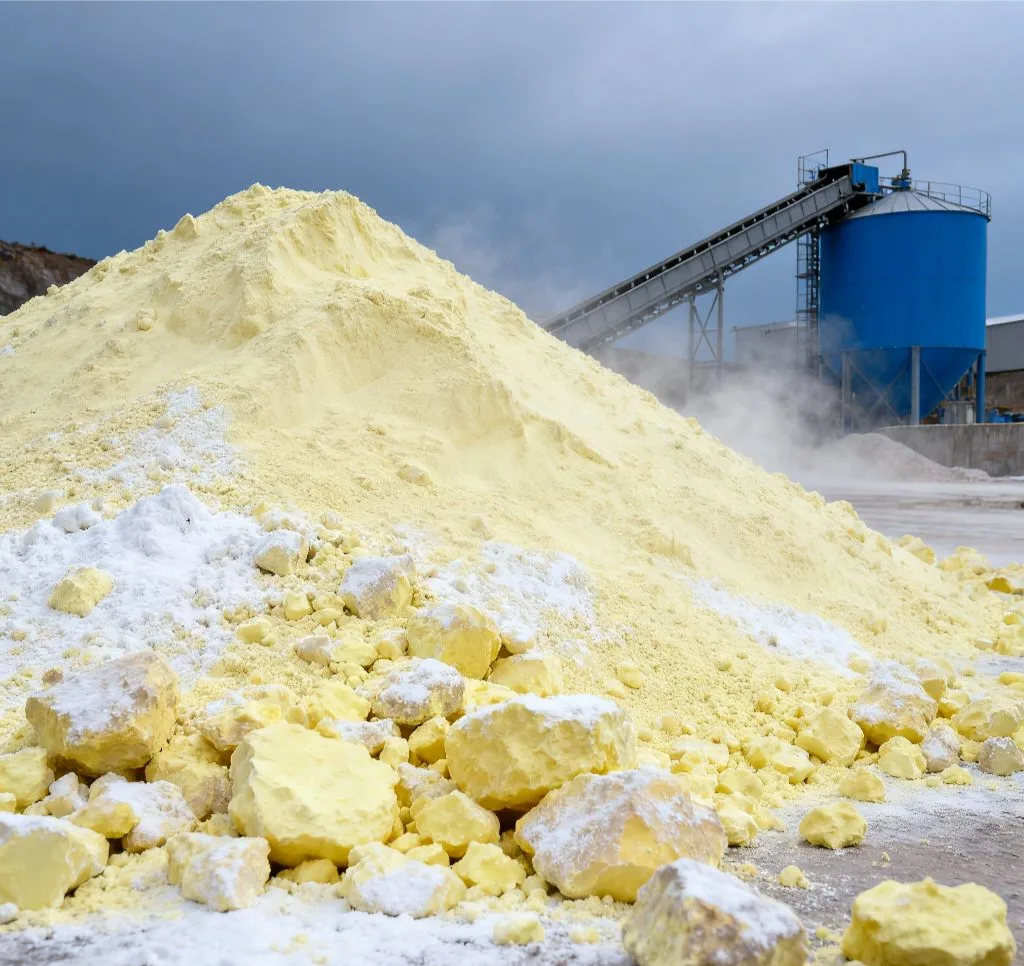
According to the latest data, Indonesia’s sulfur imports soared to 5.35 million tons in 2025, marking a dramatic 48% year-on-year increase and catapulting the nation into position as the world’s third-largest importer. While superficially reflecting shifts in one country’s demand, this rapid growth reveals deeper transformations in global supply-demand dynamics, cost structure realignments, and intensifying regional competition that will inevitably impact China – the world’s largest sulfur importer – presaging a more complex and challenging pricing environment for China’s import sulfur market.
Indonesia’s Sulfur Demand Surge Reveals New Consumption Patterns
Indonesia’s import surge is no coincidence but rather the convergence of multiple factors. First, new sulfur-burning acid production capacity represented by projects like QMB New Energy Materials serves as the core engine. This demonstrates that sulfur, as a key raw material for sulfuric acid production, is seeing demand rapidly extend from traditional phosphate fertilizer industries into the new energy vehicle supply chain. This structural demand growth exhibits greater rigidity and sustainability.
Second, the economic choice of raw material substitution proves telling. Despite sulfuric acid import licensing difficulties and continuously rising sulfur prices, Indonesian buyers still chose higher-priced sulfur. This indicates that for flexible downstream enterprises, the strategic value of building self-operated sulfur-burning acid plants to ensure supply chain security and stability has transcended short-term cost considerations. Should this trend replicate in other emerging industrial nations, it will fundamentally reshape global sulfur demand curves.
Third, supply source diversification and intensifying competition are evident. Indonesia has substantially increased procurement from traditional Middle Eastern sources like Saudi Arabia and Qatar, while Canadian sulfur has also aggressively entered the market leveraging price differential advantages. This reflects that amid robust demand, global sulfur supply networks are adjusting, with buyers actively seeking more favorable trade channels.
Ripple Effects of Indonesia’s Strong Sulfur Demand
Indonesia’s rising sulfur demand is expected to pressure China’s import market through several pathways. First, intensified competitive procurement will push up Middle Eastern and North American sulfur prices. China and Indonesia share highly overlapping core suppliers, particularly in the Middle East and North America. Indonesia’s rapidly growing demand will directly compete with China’s procurement needs at Middle Eastern ports. Supplier bargaining power is significantly enhanced, providing stronger support for contract pricing in the Middle East. This is evident from Qatar and Kuwait’s February monthly prices being raised to FOB $520/ton. Moving forward, driven by new demand from Indonesia and others, upward price pressure will persist.
Second, maritime logistics costs face upward risks. Shipping markets from the Middle East to Asia will tighten as cargo volumes increase. More importantly, geopolitical risks inject substantial uncertainty premiums into freight costs. Potential risks in Iran’s Strait of Hormuz and possible Houthi disruptions to the Bab el-Mandeb Strait constitute major uncontrollable factors from source to shipping routes, potentially causing vessel diversions, soaring insurance costs, and capacity shortages – substantially elevating landed costs.
Dynamic Sulfur Arbitrage Windows Influence Global Resource Allocation
Canadian sulfur’s diversion to Asia is precisely driven by arbitrage opportunities created by high prices and Middle Eastern supply shortages. Going forward, the flow direction of North American and Middle Eastern resources will be entirely determined by landed price differentials among major sulfur importing countries – China, Indonesia, Morocco, and others. To maintain resource attractiveness, China may have to accept higher offers.
Comprehensive Analysis: Future Trends for China’s Import Sulfur Market
Based on the above analysis, China’s import sulfur prices will exhibit core characteristics of upward bias with difficulty declining, and heightened volatility. Specifically:
First, price floors will systematically shift upward. Against a backdrop where global sulfur demand discovers new growth poles while supply-side expansion fails to match scale, supply-demand fundamentals are moving toward tight balance. Indonesia’s sustained procurement will become an important price-supporting force, elevating the long-term price floor for China’s import sulfur.
Second, price volatility will remain highly correlated with geopolitical risks. Any developments in the Persian Gulf and Red Sea regions will immediately reflect in quotes and freight through premium pricing. Price movements will depend not only on supply-demand fundamentals but also connect closely with headline news, with market risk aversion and stockpiling behavior potentially amplifying short-term fluctuations.
Third, domestic-international price differentials and import economics face challenges. While domestic sulfur prices are influenced by import costs, they are also regulated by domestic production and port inventories. When import costs remain persistently high, import traders’ profit margins may be squeezed, potentially suppressing some import demand and causing divergence between domestic and international markets for certain periods. However, if domestic demand remains robust, acceptance of higher-priced resources ultimately becomes unavoidable, facilitating price transmission.
Fourth, strategic procurement and supply chain security assume heightened importance. Relying solely on spot market procurement will entail greater costs and risks. Major Chinese importers are expected to place greater emphasis on long-term agreements with core suppliers, and may even consider upstream integration through investment or cooperation to secure resources and stabilize costs. Supply chain stability will outweigh pure price considerations.
Conclusion
Indonesia’s emergence as a major sulfur importer marks a significant signal that the global sulfur market has entered a new phase. For China, despite possessing enormous demand volume and bargaining power, it will confront more intense resource competition and more complex cost structures. Moving forward, China’s import sulfur prices will find it difficult to return to previous moderate ranges. Instead, they will operate at elevated levels with wide fluctuations, driven by stronger cost support, more frequent geopolitical premium impacts, and more rigid substitution demand. Traditional downstream industries must adapt to this new normal by optimizing procurement models, strengthening industrial chain coordination, and even adjusting process routes to navigate this fundamental market transformation.