
Against a backdrop of complex global geopolitics and intensifying conflicts, the world has entered a high-risk, high-volatility geopolitical cycle—one that is sharply impacting the global economy and profoundly disrupting nitrogen fertilizer supply chains and pricing. A preliminary analysis by the China Nitrogen Fertilizer Industry Association (CNFIA) breaks down the key dynamics shaping the market.
Part 1: Global Nitrogen Fertilizer Supply and Demand
Supply Side
The International Fertilizer Association (IFA) forecasts global ammonia production will rise 1% to 192 million tonnes in 2025, while urea output will grow 2% to a record 204.1 million tonnes. Global available nitrogen fertilizer capacity is projected to climb from 166.3 million tonnes (N content) in 2024 to 172.7 million tonnes in 2026—a 4% increase—driven by low-cost projects in the U.S., Russia, Qatar, and Nigeria. However, escalating conflicts in the Middle East are expected to weigh on production, meaning new capacity will likely fall short of initial projections.
Demand Side
Global fertilizer demand growth is slowing in 2025, pressured by falling grain prices and rising fertilizer costs. In its February 2026 Short-Term Fertilizer Market Outlook 2025–2026, the IFA projects global fertilizer consumption will grow less than 1% to around 209.4 million tonnes over 2025–2026, with nitrogen fertilizer use rising in most regions.
Geopolitical Disruption in the Middle East
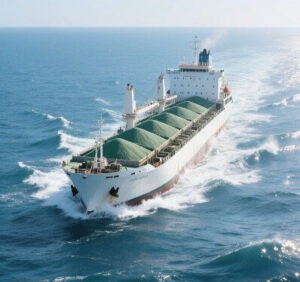
Recent military confrontations between the U.S., Israel, and Iran have triggered direct impacts on natural gas supplies, production facilities, and logistics in major Middle Eastern urea exporters like Iran and Egypt. The Strait of Hormuz—critical for regional urea and raw material shipments—faces closure risks, threatening to reshape international urea trade flows and pricing.
The Middle East is the world’s largest urea export hub, shipping roughly 20 million tonnes annually. Iran, the region’s top exporter (accounting for 40%–45% of Middle Eastern urea exports), faces direct production disruptions. Supply risks are also rising in Saudi Arabia, Qatar, and the UAE due to U.S. military deployments, while reduced natural gas supplies from Israel to Egypt are indirectly curbing Egyptian urea output.
Prior to the escalation, international urea prices hovered at $400–450/tonne; they have since surged past $600/tonne amid daily upward pressure.
Part 2: China’s Nitrogen Fertilizer Raw Material Supply and Pricing
Coal
China’s coal market is broadly balanced in 2026, with prices expected to fluctuate within a narrow range. National raw coal output is projected at 4.86 billion tonnes (up 0.7% YoY, the slowest growth in a decade), while total demand will reach 4.75 billion tonnes (up 0.6% YoY). Power coal demand remains stable, chemical coal use is recovering, and steel/construction coal demand is weak. Reduced coal imports and strengthened long-term contract supplies are limiting price volatility.
As of March 3, 2026, CNFIA data shows the delivered price of anthracite lump coal stood at 959 yuan/tonne (up 2.35% YoY), while bituminous coal averaged 783 yuan/tonne (down 5.43% YoY).
Natural Gas
China’s 2026 natural gas supply-demand balance is highly sensitive to global geopolitics. Consultancy Snam outlined two scenarios: a short-lived conflict with the Strait of Hormuz reopening, or a prolonged standoff with sustained closure. Either outcome—supply shortages or price spikes—poses significant challenges for China’s gas-based nitrogen fertilizer production, requiring close monitoring.
Part 3: 2026 Spring Nitrogen Fertilizer Supply-Demand Outlook
Supply
China’s urea capacity reached 72.45 million tonnes/year at the end of 2025 (up 2.86 million tonnes, or 4.1% YoY). 2026 will see another wave of new capacity additions, with 5.07 million tonnes/year of urea capacity scheduled to come online, pushing total supply capacity to 77.5 million tonnes/year. Factoring in current operating rates and daily output, 2026 urea production is set to hit a record 76.5 million tonnes.
Agricultural Demand
China’s total agricultural fertilizer demand is estimated at 49.944 million tonnes in 2026, including 25.718 million tonnes of nitrogen fertilizer, 11.104 million tonnes of phosphate fertilizer, and 13.123 million tonnes of potash fertilizer. Spring plowing will require 23.421 million tonnes of fertilizer, with nitrogen fertilizer demand at 10.269 million tonnes—flat year-on-year.
Non-Agricultural Demand
Non-agricultural urea use is projected at around 23 million tonnes in 2026:
- Wood-based panel output will reach 350 million cubic metres (up 4% YoY), driving urea demand to 11.5 million tonnes (an increase of 400,000 tonnes).
- Denitrification urea demand for vehicles, power plants, and ships will edge down by about 100,000 tonnes.
- New melamine capacity (100,000 tonnes/year) could add up to 300,000 tonnes of urea demand, though geopolitical disruptions to global logistics create uncertainty for downstream consumption and exports.
Total urea demand (agricultural + non-agricultural) is forecast at around 66 million tonnes in 2026.
Market Outlook
China’s nitrogen fertilizer supply will be ample for the 2026 spring plowing season, with full-year supply security assured. If raw material prices remain stable, urea prices are expected to stay steady during the spring planting period.
Key Recommendations
CNFIA President Gu Zongqin outlined priorities for ensuring stable nitrogen fertilizer supply:
- Fulfill spring and full-year nitrogen fertilizer production targets.
- Increase the share of high-efficiency fertilizer products.
- Maintain stable market prices for spring and full-year nitrogen fertilizer.
- Arrange exports in a timely and appropriate manner.