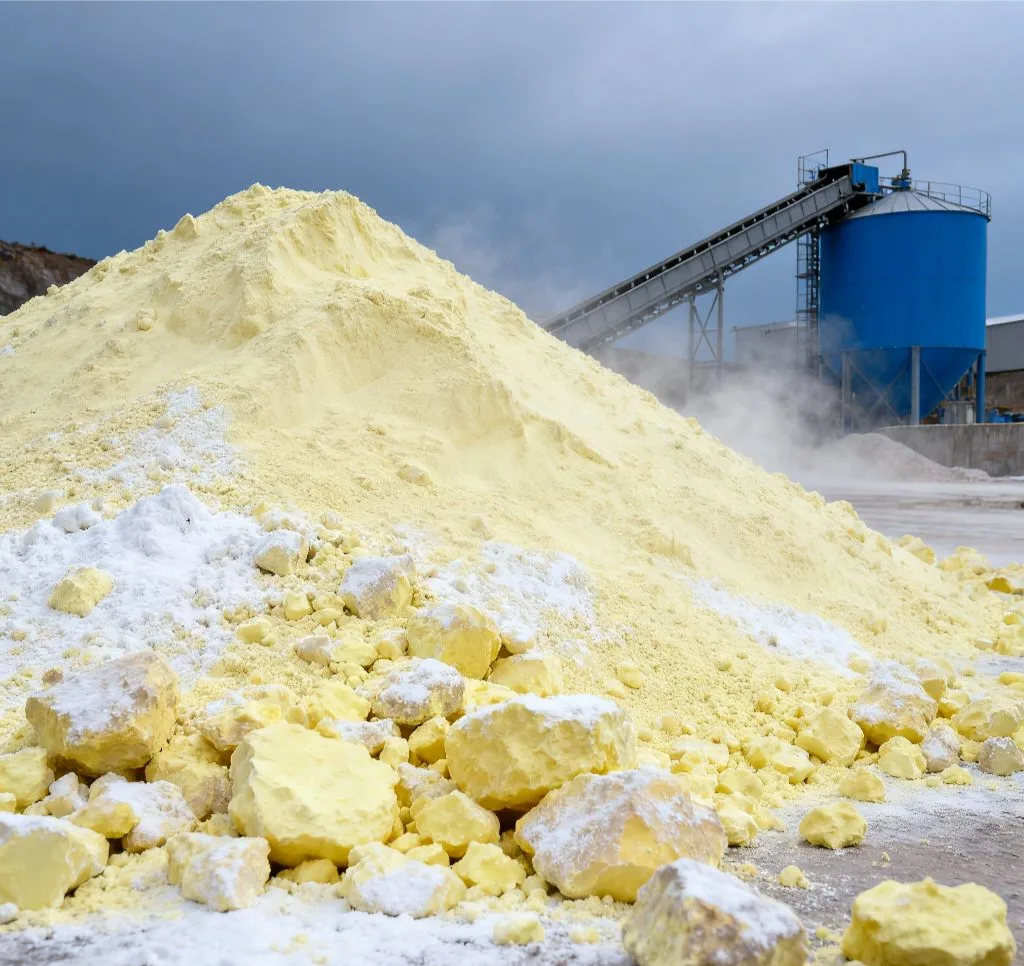
As March arrives, the sulfur market has seen persistent price fluctuations. As a core raw material for phosphate fertilizer production, sulfur price changes directly affect the stable supply of chemical fertilizers and the foundation of agricultural production. A reporter from China Agricultural Materials interviewed Liao Kangcheng, Deputy Secretary-General of the China Sulfuric Acid Industry Association, to interpret the causes of market volatility, industry impacts, and solutions, pointing out the direction for the high-quality development of the sulfur industry chain.
Global Supply-Demand Imbalance Drives Sulfur Price Hikes
Liao Kangcheng noted that the current round of sulfur price increases stems from the combined effects of global supply and demand. On the supply side, the deteriorating situation in the Middle East has disrupted shipping through the Strait of Hormuz, which carries nearly 40% of global sulfur trade. In 2025, China imported more than 55% of its total sulfur from the Middle East, making external supply disruptions a major challenge for domestic imports.
On the demand side, robust global phosphate fertilizer demand provides rigid support, while the rapid development of Indonesia’s hydrometallurgical nickel smelting industry has further boosted sulfur consumption. Indonesia plans to add over 400,000 tons of hydrometallurgical nickel capacity between 2025 and 2027, which will translate into an additional 4 million tons of sulfur demand annually. This supply-demand imbalance is the core driver of price volatility.
Industry Impact and Policy Responses
The transmission effect of sulfur price fluctuations on the phosphate fertilizer industry is direct. As a key production raw material, every 1,000 yuan per ton increase in sulfur prices raises the production cost of diammonium phosphate by about 450 yuan per ton. This cost pressure ripples through the entire industry chain, testing production operations and market stability.
Against this backdrop, ensuring stable supply and prices has become a core task for the sulfur and phosphate fertilizer industries. The Chinese government has introduced multiple policies to encourage domestic sulfur and smelting acid to prioritize supply to domestic phosphate fertilizer enterprises, and support the construction of phosphogypsum-based sulfuric acid projects, laying a solid policy foundation for industry stability.
Pathways to Break the Deadlock
Liao Kangcheng emphasized that sulfur resource shortages are a global issue that cannot be solved by a single industry or enterprise alone; it requires concerted efforts across sectors.
1. Develop Phosphogypsum-Based Sulfuric Acid as a New Sulfur Resource
Traditional sulfur resources have been maximally exploited. To enhance domestic sulfur security, new resource forms must be developed, and phosphogypsum-based sulfuric acid is the most suitable option under current market conditions.
Phosphogypsum is a waste product from phosphoric acid production via sulfuric acid leaching of phosphate ore, with China producing over 90 million tons annually. The technology converts phosphogypsum into sulfuric acid through high-temperature decomposition and catalytic oxidation of sulfur dioxide gas. Each ton of phosphogypsum processed yields about 0.14 tons of sulfur resources and 0.57 tons of cement clinker.
The technology has not been widely adopted due to high costs—sulfur prices need to stay above 2,000 yuan per ton for the process to be profitable. Current market conditions present an opportunity, but two obstacles remain: some local authorities classify it as a high-energy-consumption project, and approval for by-product cement production is required. The China Sulfuric Acid Industry Association is actively coordinating to resolve these issues.
2. Integrate Domestic Procurement to Boost International Competitiveness
China imports about 10 million tons of sulfur annually. Historically, domestic importers have acted independently, lacking collective bargaining power. Unified procurement would significantly enhance China’s competitiveness in the global sulfur market.
3. Support Nonferrous Metal Ore Imports
Smelting acid accounts for nearly 40% of China’s sulfur consumption. Easing import pressures on nonferrous metal smelters will stabilize smelting acid supply and expand sulfur resource channels.
Outlook for High-Quality Development
“The sulfur industry chain’s challenges require upstream and downstream sectors to abandon go-it-alone mindsets,” Liao said. Current difficulties stem from intertwined factors—supply-demand imbalances, external shocks, and policy adjustments. Only through strengthened industry-wide collaboration, breaking barriers in logistics, information, and capital flows, can the sector effectively respond to global uncertainties.
Moving forward, the industry should prioritize resource recycling and collaboration, promote the industrialization of green technologies like phosphogypsum-based sulfuric acid, build an independent and controllable sulfur resource security system, reduce external dependence, and achieve high-quality, sustainable development while ensuring stable supply and prices. This will provide solid agricultural input support for national food security.