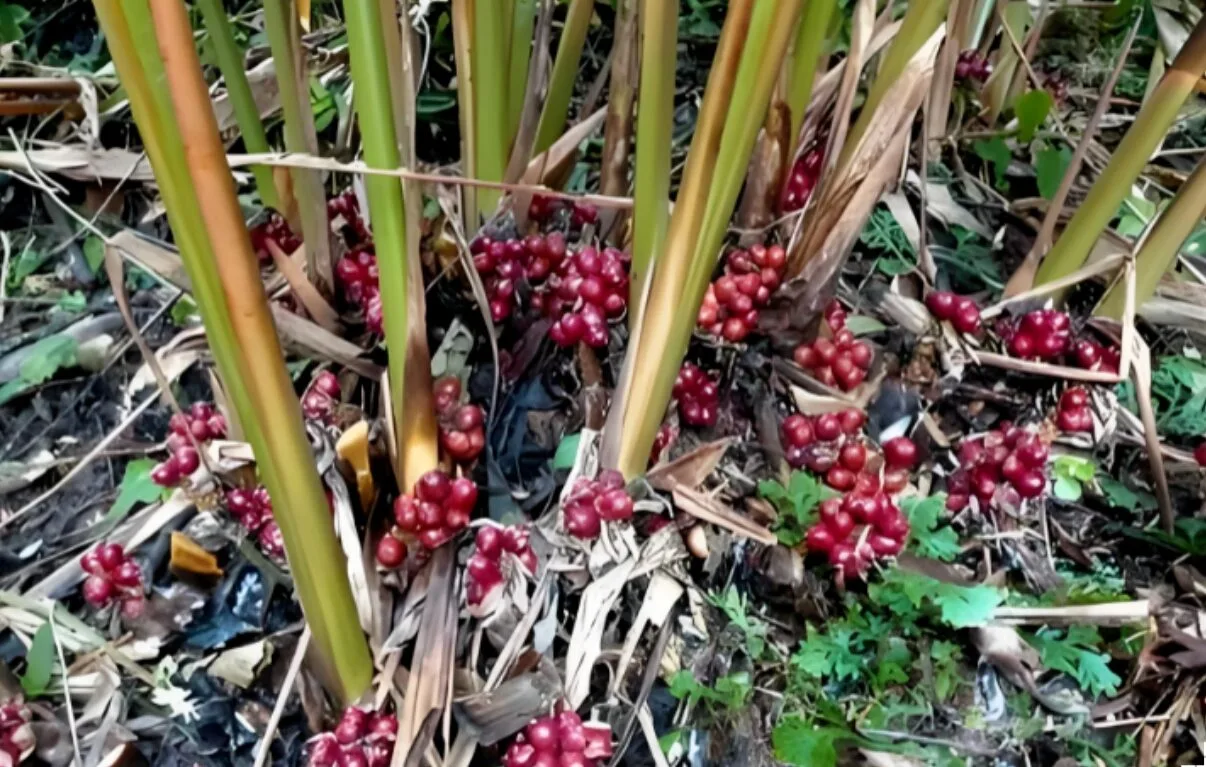
Following four straight years of production declines, China’s tsaoko market entered 2026 with cautious optimism. With 2025 output estimated at just 6,000–8,000 metric tons—a year-on-year drop of nearly 40%—the stage appears set for a potential price breakout. Yet persistent inventory overhangs and muted demand continue to temper expectations.
I. 2025 Price Review
At the start of 2025, tsaoko prices embarked on an upward trajectory driven by multiple factors. In January, Yunnan tsaoko stood at RMB 46.3/kg, rising to RMB 47.1/kg in February; over the same period, Vietnamese-origin tsaoko climbed from RMB 45/kg to RMB 45.8/kg. A price dip occurred in March due to a backflow of supplies from Vietnam and Myanmar, but by May prices had rebounded to RMB 48.9/kg. In June, heavy rainfall in Yunnan’s Nujiang production area pushed Yunnan tsaoko briefly up to RMB 48.7/kg, while Vietnamese tsaoko reached RMB 47.6/kg. Prices eased in July to RMB 47–48/kg for Yunnan material, and ahead of the August–September harvest season, they fell further to RMB 44.8–45/kg. Prices held steady at RMB 43.5–44/kg in October, saw a modest rebound in November, and by year-end, Yunnan tsaoko had retreated to around RMB 44/kg.
Currently, Yunnan tsaoko is quoted in the range of RMB 44.5–45.5/kg, with Vietnamese-origin tsaoko trading between RMB 43.3 and 43.5/kg.
II. Production Status
1. Capacity contraction
Total tsaoko output for 2025 is estimated at 6,000–8,000 metric tons, a decline of roughly 40% from the previous year. The primary cause is aging plants. Much of the tsaoko stock in the main production areas was planted during the expansion phase that followed the 2017 price surge (when prices peaked at RMB 170/kg). These plants have now entered the late stage of their prime productive life, leading to an inevitable drop in yields. Adverse climatic conditions have further affected fruit set rates.
2. High fresh-fruit prices provide cost support
As China’s main tsaoko-producing region, Yunnan saw acute supply shortages in Yingjiang, Nujiang, and other areas in 2025, with some buyers reporting difficulty securing material even at offers of RMB 45/kg. Purchasers took to stationing themselves directly at drying facilities to compete for qualifying fresh supplies, underscoring robust demand for premium-grade tsaoko. Fresh fruit prices rose rapidly: in early November, procurement prices ranged from RMB 9.2 to 9.8/kg, climbing to RMB 10.6/kg by mid-month. Based on a 4:1 drying ratio, the fresh-fruit cost alone already exceeds RMB 42/kg, establishing a clear floor under dried tsaoko prices.
3. Limited import supplementation
Imports, primarily from Vietnam and Myanmar, have failed to fill the supply gap. Both source countries face challenges related to extensive cultivation practices and climate irregularities. Combined with border clearance constraints, import volumes have not been sufficient to alleviate domestic supply tightness.
III. Three Key Factors Influencing Tsaoko Prices
Despite tight supply during the harvest period and rising costs, tsaoko prices did not stage a sustained one-way rally. Instead, market dynamics were shaped by the interplay of inventory levels, end-user demand, and external supply.
1. Existing inventory overhang
The production shortfall has not immediately translated into higher prices, largely because inventories accumulated in previous years are still being absorbed. High-quality supplies are concentrated in the hands of some holders, and the gradual digestion of these stocks has offset the impact of the output decline, placing a ceiling on price appreciation.
2. Subdued demand absorption
Against a broader economic backdrop, growth in end-market demand—particularly from the foodservice sector—has moderated, resulting in steady but unremarkable consumption. When fresh supplies concentrated in the market toward the end of 2025, cost pressures drove periodic price increases, but insufficient support from the demand side limited the strength of the upward momentum.
3. Import supply
Consistent inflows of tsaoko from Myanmar and other overseas sources have effectively supplemented domestic availability, helping to maintain overall price stability in the market.
IV. Outlook for 2026
Looking ahead, the key factors to watch in 2026 are whether the supply side continues to validate the production-decline narrative and whether end-user demand shows genuine recovery. Tsaoko’s attributes—good storability and low capital carrying costs—make it suitable for medium- to long-term allocation strategies. In the near term, market participants may consider opportunistic restocking during price dips following sell-offs. For the medium to long term, a phased accumulation strategy may be warranted, leveraging the variety’s storability against the backdrop of consecutive production declines. However, close attention must be paid to changes in import flows and the pace of demand recovery in secondary and tertiary markets.