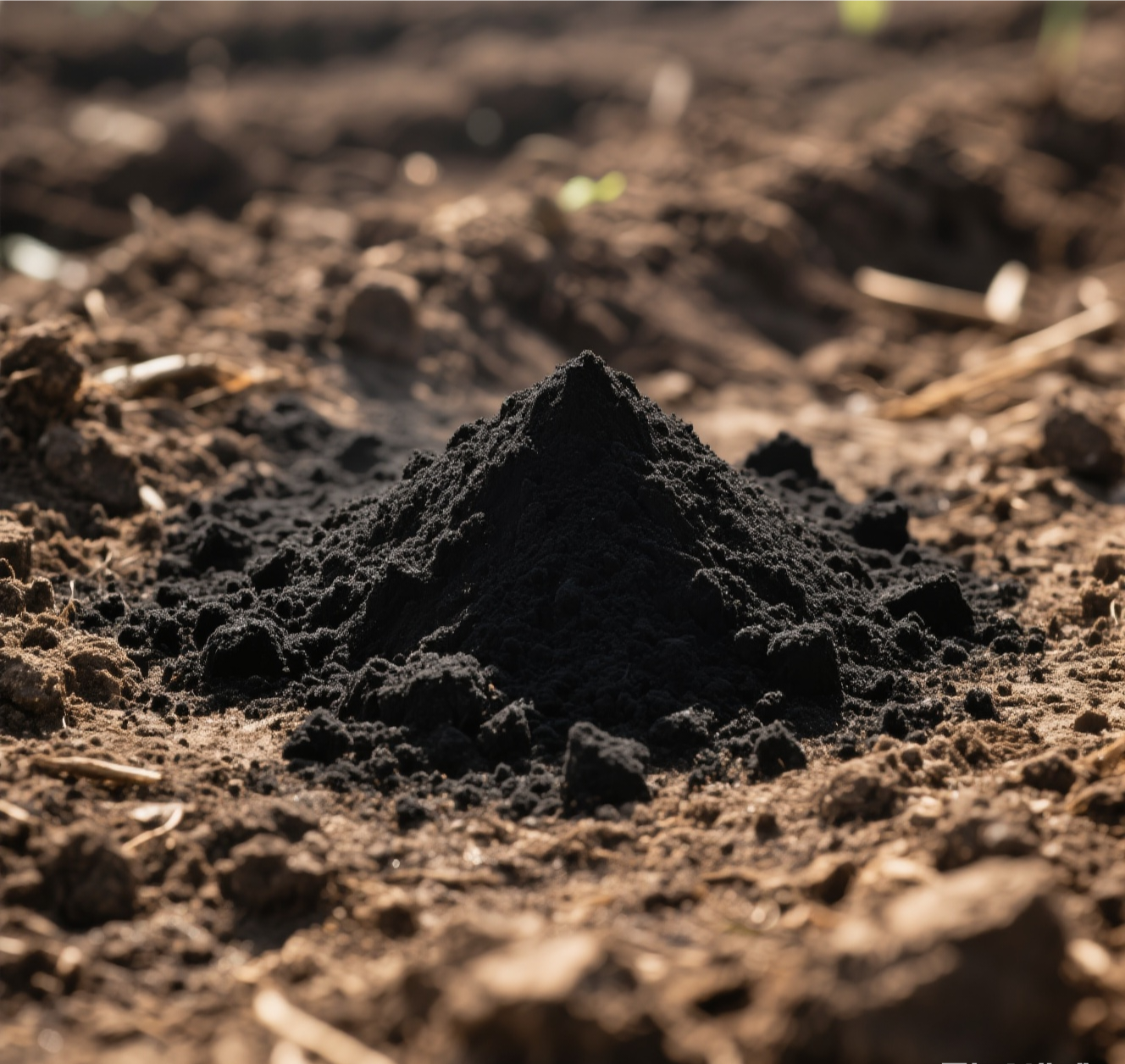
As of 2026, the condition of China’s soil has moved far beyond the initial stage of “simple degradation” and has evolved into a systemic, compound ecological crisis. A joint assessment by the Ministry of Agriculture and Rural Affairs, the Ministry of Ecology and Environment, and the Chinese Academy of Sciences reveals that the country’s soil is currently plagued by eight core problems. Industry insiders have succinctly summarized these as “hard, hungry, poor, shallow, sour, salty, dirty, and mixed.” Each term highlights a critical pain point for the land and poses a direct threat to the nation’s food security.
The Eight ‘Soil Diseases’ Explained
1. Hard — Soil Compaction
The soil becomes as hard as a brick, making it difficult for water to penetrate and for crops to take root. The main causes are insufficient application of organic fertilizer, excessive use of chemical fertilizers (especially nitrogen, phosphorus, and potassium), repeated compaction by agricultural machinery, and unreasonable tillage practices. The direct consequence is that crop roots are starved of oxygen, hindering development and reducing nutrient uptake even when fertilizers are applied.
2. Hungry — Nutrient Imbalance
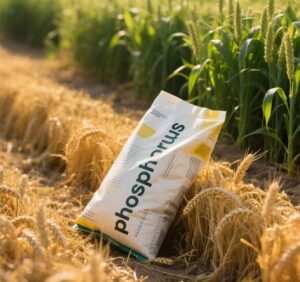
The more chemical fertilizer is applied, the more yields stagnate or decline. Fruits and vegetables show cracking, yellowing, and premature aging, often accompanied by symptoms of nutrient deficiency. The root cause is the singular focus on nitrogen, phosphorus, and potassium while neglecting secondary and micronutrients such as calcium, magnesium, zinc, and boron. Continuous cropping depletes soil nutrients without adequate replenishment. This leads to a decline in product quality and weaker resistance to pests, diseases, and adverse weather.
3. Poor — Organic Matter Depletion
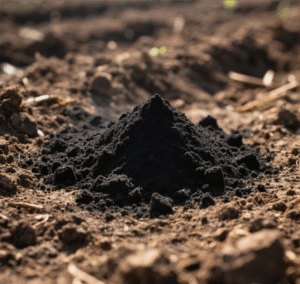
The average organic matter content of China’s arable land is only around 2.0%. The black soil of the northeast is losing 0.3 to 1 centimeter of fertile topsoil annually, with some areas falling below 1%. Low rates of straw and manure return to fields, coupled with an over-reliance on chemical fertilizers, have reduced the soil’s nutritional foundation. This diminishes the soil’s ability to retain water and nutrients, making it inhospitable for beneficial microorganisms and causing a steady decline in land fertility.
4. Shallow — Thinning Topsoil Layer
The effective topsoil layer available for crop roots has thinned to just 15–20 centimeters, underlain by a hardened plow pan that roots cannot penetrate. Long-term reliance on shallow rotary tillage without deep plowing or subsoiling has progressively reduced the depth of cultivable soil. This weakens crops’ drought and lodging resistance, increases susceptibility to yield losses during dry spells or storms, and largely eliminates the land’s capacity for water storage and moisture conservation.
5. Sour — Soil Acidification
In southern red soil regions, soil pH values generally fall below 5.0, with some areas dropping under 4.0. Excessive application of physiologically acidic fertilizers such as ammonium sulfate and potassium chloride, combined with acid rain and intensive cropping that depletes soil bases, has driven acidification. The resulting activation of toxic aluminum and manganese ions damages crop roots. Root-knot nematodes thrive, beneficial microorganisms decline, and the soil microbial community becomes imbalanced.
6. Salty — Salinization / Secondary Salinization
White crusts, algae, or even reddish rust appear on the soil surface, particularly in greenhouse production areas. Enclosed greenhouse environments, flood irrigation, excessive fertilizer use, application of uncomposted manure, and a shallow tillage layer that prevents salt leaching have led to salt accumulation. This creates “physiological drought” where crops cannot take up water despite its presence, and also causes ion toxicity, hindering nutrient absorption and crop development.
7. Dirty — Soil Contamination
Two major pollution types affect China’s soil. Heavy metal contamination (cadmium, arsenic, lead, mercury, etc.) exceeds standards in 19.4% of the country’s arable land, according to the Geochemical Survey Report of China’s Arable Land. Organic pollution includes pesticide residues, plastic film fragments, antibiotics, and polycyclic aromatic hydrocarbons, which are difficult to degrade. Major sources include industrial and mining waste (34.1%), agricultural non-point source pollution (28.7% from fertilizers, pesticides, and livestock manure), as well as wastewater irrigation and landfill leachate. Serious consequences include heavy metal exceedances in agricultural products, such as a 10.3% cadmium exceedance rate in rice, directly threatening food safety and human health.
8. Mixed — Continuous Cropping Obstacles and Biological Imbalance
Older greenhouses suffer from high disease pressure, low yields, and poor quality, while newly cultivated land degrades rapidly after just a few years. Continuous monocropping (e.g., cucumbers, tomatoes), excessive use of chemical pesticides and fertilizers that suppress beneficial microbes, and the buildup of soilborne pathogens (such as Fusarium and root-knot nematodes) are the primary drivers. The underlying issue is a disruption of the soil micro-ecology, where “bad” bacteria overwhelm “good” bacteria, eroding the land’s natural immunity.
Alarming National-Level Data
Over 40% of China’s arable land is degraded, and low- to medium-yield fields account for more than 70% of the total. The overall soil contamination point exceedance rate stands at 16.1% (ranging from mild to severe pollution). Soil degradation leads to annual grain losses exceeding 12 million metric tons, representing an economic loss of more than RMB 10 billion each year.
Root Cause: A Vicious Cycle of Imbalanced Human-Land Relations
The relentless pursuit of short-term high yields has come at the expense of soil health. Neglect of soil fertility maintenance, combined with heavy reliance on chemical inputs, has pushed soil ecological functions to the brink of collapse, trapping farmers in a vicious cycle of diminishing returns.
As one expert put it, “Soil is like a mother. If she is constantly exploited without care, she will eventually fall ill. Soil health is the very foundation of food security. Without healthy soil, there can be no healthy grain.”
The Path Forward: Transitioning to Green Agriculture
Breaking this vicious cycle requires a fundamental shift toward green farming practices that allow the land to recover and regain vitality. Key measures include:
-
Reducing the application rates of chemical fertilizers and pesticides to end excessive input.
-
Increasing the use of organic fertilizers and promoting straw return to replenish soil nutrients.
-
Implementing crop rotation and fallow periods to give the land time to rest.
-
Developing and deploying bio-fertilizers and soil remediation technologies to repair damaged soils.
-
Establishing a virtuous cycle of “healthy soil → high-quality agricultural products → increased farmers’ incomes.”
As national policy emphasizes, “Storing grain in the land, storing grain in technology.” Protecting soil is not a matter of choice but an imperative that concerns the safety of every person’s food supply and the well-being of future generations.
The message is clear: let us begin by paying attention to soil health, support green agriculture, and safeguard the land beneath our feet. After all, healthy soil produces healthy grain, and healthy grain protects our well-being.