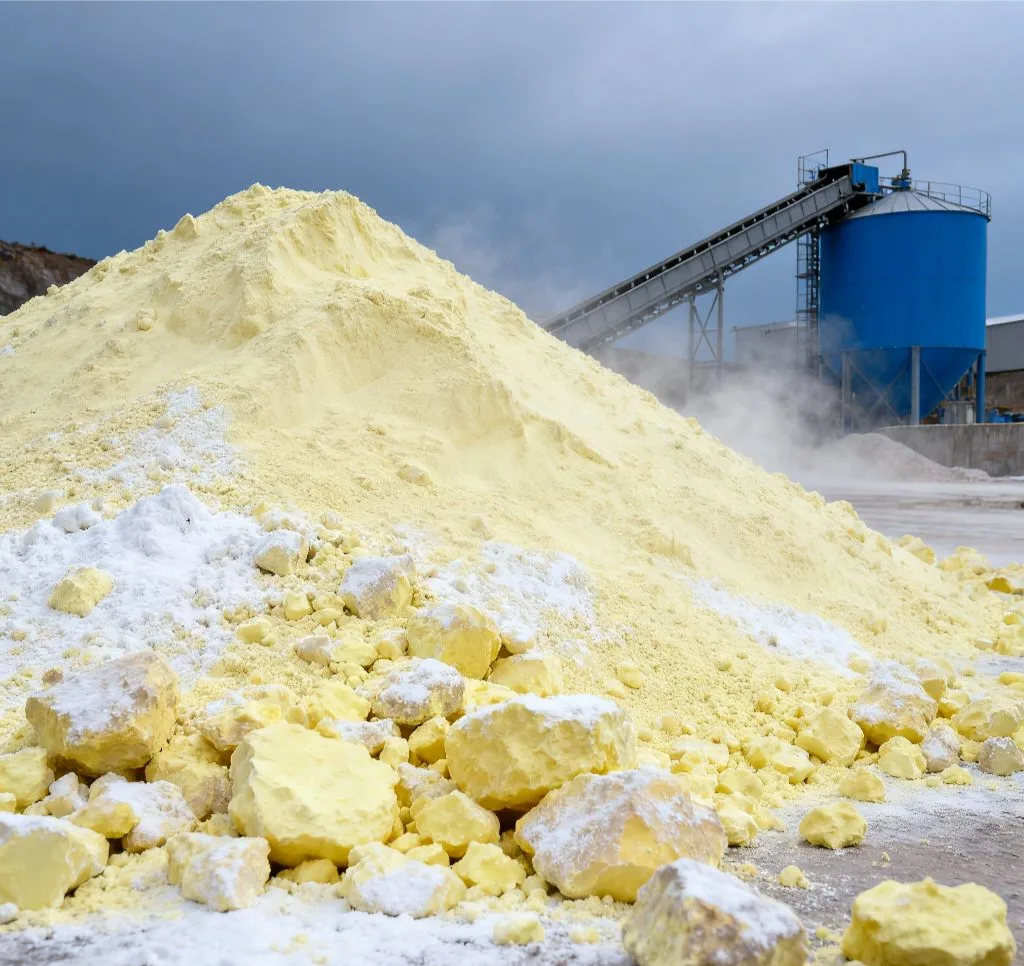
Since March, raw material sulfur prices have surged dramatically, with monthly gains exceeding 43% and repeatedly hitting new highs. The concurrent rise in sulfuric acid prices has strongly pushed up production costs for monoammonium phosphate (MAP). Although the cost side has provided significant price support, policy interventions and weak downstream demand have limited upward momentum, leaving the MAP market in a high-level stalemate.
MAP prices rise then stabilize
In March, China’s domestic MAP market experienced an initial increase followed by a period of stability and high-level consolidation. Prices accumulated gains of approximately RMB 200 per metric ton over the month. In Hubei Province, mainstream ex-factory prices for 55% powder MAP ranged from RMB 3,850 to RMB 4,050 per metric ton, with peak prices reaching RMB 4,100 per metric ton.
At the beginning of the month, sulfur prices rose rapidly due to geopolitical tensions in the Middle East, significantly raising production costs. Many producers suspended quotations and held back sales, tightening market supply and pushing prices higher as downstream buyers replenished essential stocks. By mid-month, sulfur and sulfuric acid prices continued to climb, compounded by rising freight costs, intensifying cost pressures on producers. Limited order acceptance supported further price increases.
In the third week of March, sulfur prices approached RMB 6,000 per metric ton, and producer offers surged to RMB 4,000–4,100 per metric ton. However, downstream buyers became cautious at these high levels, and transaction volumes at elevated prices remained weak.
Policy interventions cool market
During the fourth week of March, following an industry meeting focused on supply assurance and price stability, regulatory pressure on the domestic phosphate fertilizer market intensified further. MAP price caps were implemented, and key suppliers successively lowered ex-factory prices back to previous levels. Leading producers adjusted prices down to RMB 3,850 per metric ton, quickly tempering the earlier rapid price increases. Simultaneously, news of adjustments to legal inspection requirements for fertilizer exports signaled continued tight export controls, significantly cooling bullish market sentiment. Under the combined influence of multiple policy measures, MAP market offers retreated after briefly hitting near-term highs, with reduced downstream inquiry and follow-up orders, effectively curtailing the overall upward trend.
Cost pressures intensify
On the cost side, the domestic sulfur spot market showed a strong one-way upward trend in March. As of March 27, spot sulfur prices at Zhenjiang Port were quoted at RMB 5,850 per metric ton, up RMB 1,750 from the end of February, a gain of 43.68%. By March 30, prices at Zhenjiang Port had surged further to RMB 6,100 per metric ton, representing a monthly increase of over 48%. Based on theoretical cost calculations, the RMB 1,750 per metric ton increase in sulfur translates into an approximate RMB 788 per metric ton rise in MAP production costs. In the sulfuric acid market, delivered prices in Hubei Province rose by RMB 290 per metric ton over the month, adding approximately RMB 435 per metric ton to MAP costs. In contrast, MAP prices increased by only RMB 200 per metric ton in March, sharply compressing producer profit margins and intensifying cost-side pressures.
Supply to contract producers struggle
Currently, overall operating rates among domestic MAP producers remain relatively high. As of March 26, industry capacity utilization stood at 69.57%, down 0.79 percentage points month-on-month but up 9.09 percentage points year-on-year. Leading producers continue to operate at high levels to ensure supply, while production lines that were shut for maintenance before the Lunar New Year resumed operations in March. Market supply has been relatively abundant throughout the month. However, with costs outweighing revenues, an increasing number of small and medium-sized plants are undergoing maintenance or suspending production, suggesting that MAP supply will gradually contract.
Weak demand as spring season winds down
On the demand side, downstream compound fertilizer producers focused on spring fertilizer production in March, purchasing MAP on a just-in-time basis. Although industry operating rates have continued to recover, high raw material prices have constrained buyers to essential restocking only, with no concentrated stockpiling activity observed. Overall transaction paces remain slow.
Outlook: high-level stalemate to persist
Looking ahead, continued tensions in the Middle East, tight sulfur shipping schedules, falling port inventories, combined with phosphate fertilizer producers’ supply assurance commitments and long-term contract replenishment, suggest that domestic sulfur prices still have room to rise in April. Sulfuric acid prices are also expected to trend higher in April, supported by high raw material costs, regional supply differentiation, and downstream essential demand. According to available information, four MAP plants are currently planning maintenance shutdowns in April. As losses deepen, output in Hubei and Southwest China is expected to contract, with some small and medium-sized producers potentially cutting or halting production. Overall, total domestic MAP supply is expected to decline significantly.
On the demand side, spring plowing fertilizer application is gradually concluding, demand from Northeast China is winding down, and summer high-nitrogen fertilizer production will require less phosphate fertilizer. Downstream purchasing will remain largely need-based.
In summary, MAP prices face strong cost support and tightening supply, but demand is entering the off-season and policy controls remain in place, leaving limited impetus for significant price increases. The market is expected to maintain a high-level stalemate with rangebound trading.