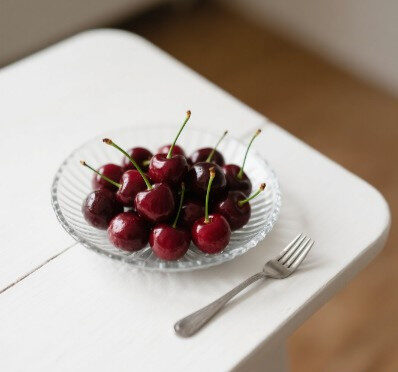
The Chilean cherry season has kicked off with great momentum, yet barely a month after the first air-shipped cherries arrived in Shanghai on October 17, overall sales have fallen short of expectations. Increasing arrivals, weakening consumer interest, and inconsistent fruit quality have all contributed to the slowdown.
According to Decofrut, the season began on a strong note. During Week 43 (October 20–26), the average cherry price in Guangzhou reached $53.36 per kg (approx. RMB 380), up 44% from the previous season’s opening price, while Shanghai recorded $40.89 per kg (approx. RMB 290), a 37% year-on-year increase.
However, by Week 44 (October 27–November 2), as more shipments reached the market, consumer enthusiasm waned. High prices and uneven quality have been cited as key factors behind the underwhelming sales performance.
Manuel José Alcaino, President of Decofrut, noted that the recent price drop is largely due to the surge in supply. Cumulative cherry exports as of this period reached 2,083 tons, a 334% increase compared to the 480 tons recorded at the same time last year. Currently, cherry prices in Guangzhou have fallen by 32%, with a slight 2% decline in Shanghai.
Julio Ruiz-Tagle, Asia and Americas Manager at D-Quality Survey, pointed out that although the season started reasonably well, the quality of incoming cherries needs improvement. In a rush to capture early-market opportunities, some Chilean suppliers packed substandard fruit, leading to issues such as softening, stem loss, immaturity, and even minor decay in the market.
Regarding varieties, Ruiz-Tagle was blunt in his assessment, stating that the Nimba variety has been a “complete failure” and should be phased out, while the performance of Sweet Ariana has also been unsatisfactory.
Alcaino acknowledged quality problems with certain cherry varieties but emphasized that these are not widespread. He noted that while Nimba and some Royal Dawn shipments faced issues, Santina—currently the variety with the largest market share—has performed well, along with Black Rock.
Walter Masman, a Chilean cherry technical advisor, explained that the inconsistent quality stems partly from improper harvesting practices. For instance, the early-ripening Nimba variety often has low Brix levels at harvest and inherent genetic traits that make it unsuitable for ocean shipping. Producers are urged to manage such varieties carefully to avoid post-harvest quality loss.
With the Chinese Spring Festival still some time away, Ruiz-Tagle believes it is unwise to oversupply the market at this stage. Current pricing for 2.5-kg boxes sits around RMB 200 for 2J size, RMB 400 for 3J, and RMB 150 for XL. He stressed that “these prices are indeed on the low side.”
Ruiz-Tagle also observed that the industry has not fully learned from past lessons. Many stakeholders rushed to send cherries by air in pursuit of early high prices, yet failed to achieve their goals. Allowing low-quality fruit to enter the market ultimately harms the entire industry.
Alcaino reiterated that the market only pays a premium for good-quality cherries and urged shippers to avoid sending varieties known to have poor storage resilience by sea. He called for unity and self-discipline across the industry.
In his summary, Alcaino noted that the market has repeatedly shown that when cherry volumes are excessive, sizes L and XL struggle to earn price premiums. Furthermore, recent rainfall in Guangzhou has further slowed cherry sales.