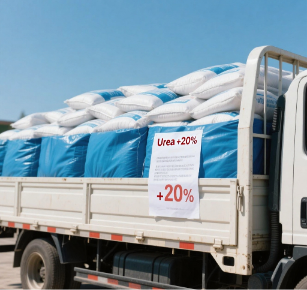
2025 was a pivotal year for China’s urea industry, marked by proactive regulatory guidance, market stabilization measures, and significant adjustments to trade policies. Below is a summary of the major developments.
1. National Policy Framework for Fertilizer Supply & Price Stabilization
In preparation for the spring ploughing season and to ensure adequate, affordably priced fertilizer supply throughout the year, the National Development and Reform Commission (NDRC), in coordination with multiple ministries and agencies, issued a comprehensive notice on securing fertilizer supply and stabilizing prices.
The notice outlined six key task areas:
-
Ensuring stable production by securing energy and raw material supplies.
-
Facilitating efficient logistics and improving coordination between producers and distributors.
-
Strengthening the management of fertilizer reserves to leverage their market-regulating function.
-
Enhancing the administration of fertilizer import and export services to maintain orderly trade.
-
Intensifying market supervision to uphold a fair trading environment.
-
Promoting scientific fertilization through enhanced agricultural services.
Provincial development and reform commissions were tasked with leading local efforts, with 13 major grain-producing provinces required to establish special task forces for spring fertilizer supply and price stability.
2. Major Export Policy Adjustment and Market Volatility
From late April through May, the urea market experienced significant turbulence driven by speculation over potential changes to export policies. Rumors fueled speculative trading, leading to a sharp rise in futures prices which subsequently pushed up spot market prices.
To curb speculation and safeguard domestic agricultural supply, the China Nitrogen Fertilizer Industry Association (CNFIA) issued consecutive initiatives on May 9th and 12th. It urged major producers to prioritize farmers’ interests by rolling back ex-factory prices to pre-May 6th levels within three days and emphasized stricter self-regulation on exports. By mid-to-late May, as the export speculation subsided, market sentiment cooled significantly, refocusing on fundamental supply-demand dynamics.
A new export quota system was implemented starting May 24th. All urea exports became subject to a mandatory inspection process with a standard 10-working-day timeline. Initially, inspections were conducted only at factories, with a minimum export price (FOB) updated bi-weekly. All export contracts required prior approval from relevant authorities. By late June, port inspections were permitted, but only three enterprises were accredited to conduct them. Between May and November, four batches of export quotas were allocated, primarily to entities participating in seasonal reserve programs and certain traders.
3. 2026 Fertilizer Import Quota Announcement
In accordance with relevant regulations, the Ministry of Commerce established the total volume, allocation principles, and procedures for fertilizer import tariff quotas in 2026. The total quota was set at 13.65 million tons, comprising:
-
Urea: 3.30 million tons
-
Diammonium Phosphate (DAP): 6.90 million tons
-
Compound Fertilizers: 3.45 million tons
The quotas were divided into state trading and non-state trading portions:
-
State Trading Quotas: Urea (2.97 million tons), DAP (3.52 million tons), Compound Fertilizers (1.76 million tons). These are allocated to designated state-trading enterprises.
-
Non-State Trading Quotas: Urea (330,000 tons), DAP (3.38 million tons), Compound Fertilizers (1.69 million tons). Eligible non-state trading enterprises may apply for these quotas.
Conclusion
The year 2025 underscored the Chinese government’s balanced approach to managing the urea industry: ensuring domestic supply stability and price affordability for agriculture through coordinated planning and market intervention, while simultaneously implementing more structured and controlled trade mechanisms for exports and imports. These measures aimed to navigate the complexities of both domestic needs and the global fertilizer market.