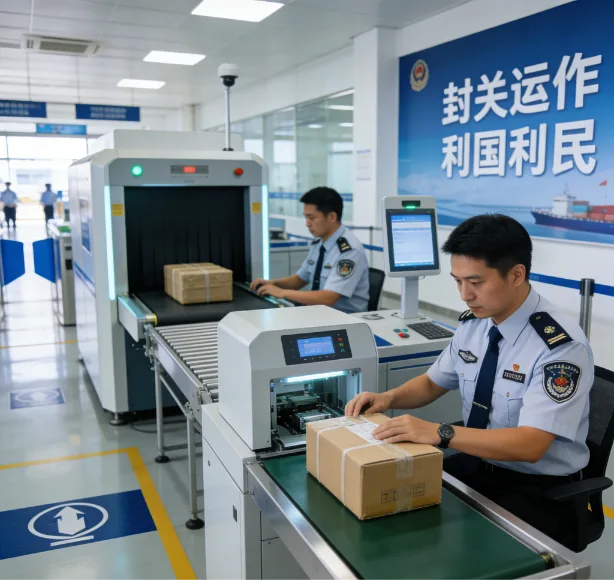
December 18th, marks the official launch of island-wide customs closure operations for the Hainan Free Trade Port (FTP), ushering China’s largest free trade port into a new era as an “in-country, outside-customs” zone. Post-closure, the range of zero-tariff goods will expand significantly from the current 1,900 tariff lines to approximately 6,600 lines, covering about 74% of all goods—an increase of nearly 53 percentage points.
For agricultural inputs entering Hainan FTP from overseas, this means qualifying products will be exempt from import tariffs, import VAT, and consumption tax. Research estimates indicate this policy could reduce the import cost of eligible high-end fertilizers and pesticides by 30%-50%, directly lowering the price threshold for agricultural production materials.
Zero-Tariff Benefits for Imported Fertilizers & Pesticides
Starting December 18th, enterprises in Hainan can import agricultural machinery and high-quality agricultural inputs duty-free, reducing costs and enhancing efficiency while promoting deep processing and industrial upgrading of agricultural products. For the fertilizer and pesticide sector, this policy will significantly lower the upfront investment and operational costs for high-tech and premium agriculture. The import of advanced agricultural inputs will also benefit from zero-tariff treatment, boosting the overall competitiveness of Hainan’s agriculture. Inputs such as seeds, smart agricultural machinery, and green fertilizers imported under this policy will directly reduce upstream input costs.
Professor Luo Biliang from South China Agricultural University highlighted that post-closure, the proportion of zero-tariff items will rise from 21% to 74%, covering agricultural inputs like seeds, machinery, and fertilizers, with import cost reductions of 30%-50%. The duty-free introduction of smart agricultural machinery will notably enhance production efficiency. Concurrently, processed goods with over 30% value-added can enter the mainland market tariff-free, driving the transformation of agricultural deep processing.
Processing with 30% Value-Added: Pathway to Mainland Market
It is crucial to clarify that Hainan’s island-wide customs closure does not mean “isolating the island.” Instead, it adopts a supervision model of “frontline liberalization, second-line control, and free flow within the island” to establish Hainan as an “in-country, outside-customs” area. “Frontline liberalization” allows free movement of goods between Hainan and overseas, while “second-line control” means goods entering the mainland from Hainan are subject to standard customs supervision and applicable taxes.
Agricultural inputs imported under zero-tariff into Hainan are not entirely exempt from tariffs when entering the mainland. According to policies, such goods will face strict supervision at second-line ports to prevent unregulated flow into the mainland market.
Notably, regulations from the Ministry of Finance and other departments stipulate that if encouraged industrial enterprises within the Hainan FTP use imported materials to produce goods and achieve a “value-added” rate of 30% or more through processing in Hainan, those goods can enter the mainland via the second line exempt from import tariffs. This implies that simply imported fertilizers or pesticides entering the mainland would still require tariff payment.
Opportunities and Challenges: Potential Market Restructuring
With the release of policy dividends, Hainan is poised to evolve from a tropical agricultural base into a new international hub for agricultural cooperation. For the agricultural inputs industry, this presents opportunities to reduce costs and enhance quality, but also brings challenges of intensified international competition.
The primary burdens in traditional agriculture stem from the costs of imported seeds, fertilizers, pesticides, machinery, and labor. Post-closure, enterprises can duty-free import world-class agricultural inputs but will also face fiercer market competition. Companies in the sector must calmly assess their positioning and adjust their development strategies.
Driven by advantages such as reduced costs, tariff exemption for processed goods with value-added, industrial chain agglomeration, technological innovation, and facilitated access to international markets, the domestic agricultural inputs market may undergo a new round of adjustments.
Potential challenges also warrant attention: increased competitive pressure on mainland enterprises, heightened risks of smuggling, potential disruptions to market order, and regional development imbalances remain issues to be addressed.
It is foreseeable that with the official launch of Hainan FTP’s customs closure operations on December 18th, the landscape of China’s agricultural inputs industry will encounter new changes. For many enterprises, seizing policy dividends and strategically positioning themselves in Hainan could become a critical move for future competitiveness.
For the fertilizer and pesticide sectors, this represents both an opportunity and a challenge. Enterprises must analyze the situation objectively and leverage their strengths: stronger players may use Hainan as a springboard to expand into international markets, while mainland-based companies need to accelerate technological innovation and industrial upgrading to enhance their core competitiveness.