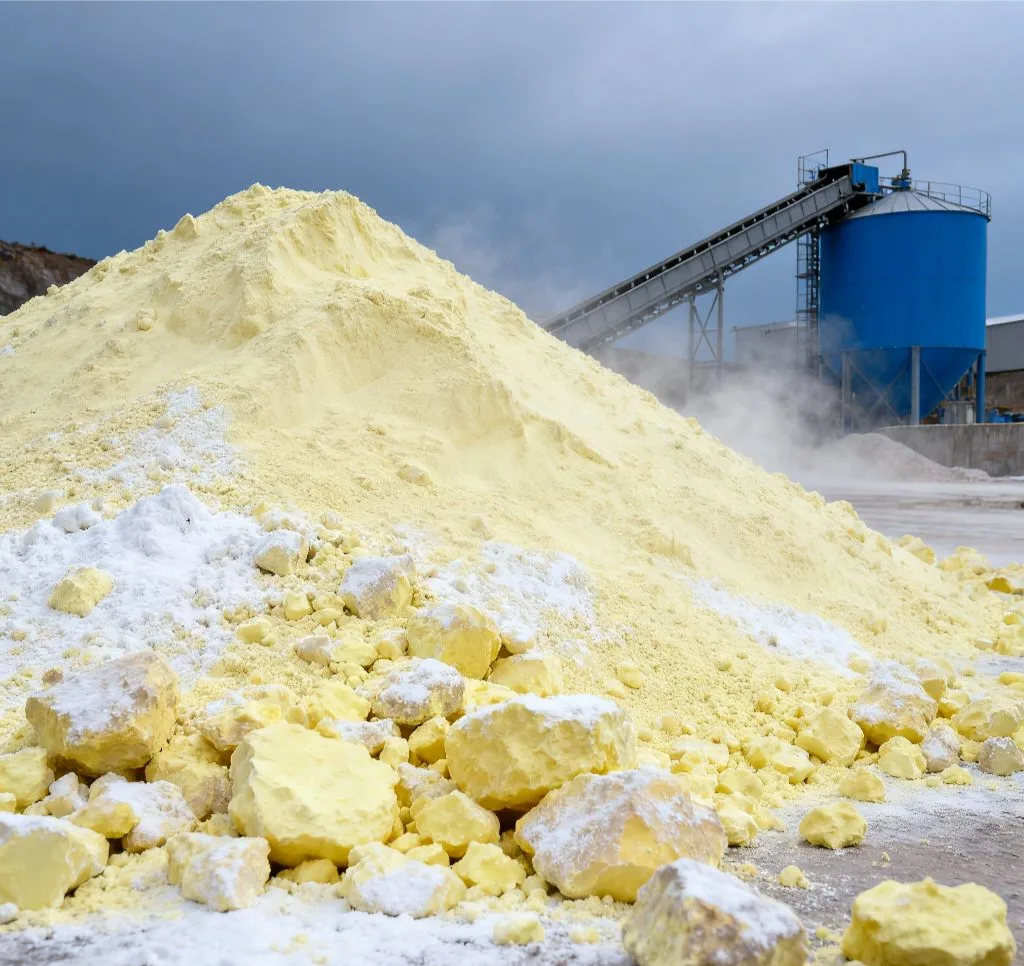
China’s sulfur import pattern in 2025, particularly in the latter months, has undergone a significant and noteworthy transition, moving from sustained high volumes to a pronounced contraction. This shift, driven by stark international price dynamics and resultant import economics, marks a potential inflection point for the market.
1. Import Snapshot: A Dramatic Late-Year Decline
The contraction became sharply evident in November 2025. China’s sulfur imports for that month totaled 487,000 tonnes, representing a substantial month-on-month decrease of 29.26% and a year-on-year drop of 28.08%. This double-digit decline pulled down the cumulative import figure for the January-November period to 9.186 million tonnes, marginally lower (-0.07%) than the same period in 2024, effectively erasing earlier gains and signaling a decisive downturn in import momentum as the year closed.
2. The Core Driver: Severe Price Inversion Curbing Demand
The primary factor behind November’s import slump was a sustained and significant price disconnect. The shipments arriving in November were largely based on orders finalized around October, a period when international sulfur prices experienced a sharp and continuous rally. This surge created and sustained a severe price inversion: international contract prices far exceeded domestic spot prices in China. Faced with this unfavorable economics, importers’ purchasing enthusiasm plummeted. The reluctance to chase high-priced overseas material and the lack of profitability in bringing in cargoes effectively suppressed buying interest, leading directly to the steep decline in import volumes.
3. Structural Composition: Sources and Destinations
By Country of Origin/Supply: In November, China’s sulfur imports were concentrated among key suppliers. The top five sources were Oman, the United Arab Emirates, South Korea, India, and Japan. Combined, these countries supplied 401,100 tonnes, accounting for 82.31% of the total for the month, underscoring the continued reliance on Middle Eastern and Asian suppliers despite the overall volume drop.
By Domestic Destination (Importer Registration Location): Domestically, imports were channeled primarily into five regions: Yunnan Province, Hainan Province, Jiangsu Province, Shanghai Municipality, and Sichuan Province. Together, these areas accounted for 396,200 tonnes or 81.31% of November’s imports, highlighting the demand centers, particularly in southwestern China (linked to phosphate fertilizer production) and major eastern industrial hubs.
4. Outlook: Low Imports Expected to Persist
The trend of subdued imports is projected to continue through December 2025. Two key factors support this forecast:
-
Scheduled Arrivals: As of December 23rd, the planned vessel arrivals for solid and liquid sulfur in December stood at approximately 339,300 tonnes. This schedule indicates a significant reduction compared to the finalized imports in November.
-
Persistent Market Dynamics: International sulfur prices (on a USD basis) are expected to remain elevated and range-bound. In this environment, importers are likely to maintain a cautious and restrained purchasing approach, with limited appetite to engage at high price levels.
Conclusion: The latter part of 2025 has witnessed a pivotal shift in China’s sulfur import paradigm. The powerful combination of sustained high international prices and a resulting domestic price inversion has broken the previous rhythm of high-volume imports. With the economic incentive for import largely absent, volumes have fallen sharply and are anticipated to remain at low levels in the immediate term. This development underscores the heightened sensitivity of China’s sulfur import volume to global price differentials and marks a key transition point in the 2025 trade landscape.