As the inaugural year of China’s 15th Five-Year Plan, 2026 is expected to see agricultural product prices characterized by “overall stability with moderate increases, structural divergence, and cyclical rotation.” Under the combined influence of policy support, supply-demand adjustments, and cost fluctuations, prices across different categories are likely to follow distinct trajectories, offering both opportunities and challenges for market participants.
I. Macro Environment and Policy Support
In 2026, agricultural policies will center on increasing farmers’ incomes. Central government funds have been allocated in advance, amounting to 106.2 billion yuan for rural revitalization, forming a three-tier support system of subsidies, price mechanisms, and insurance. The average subsidy for farmland fertility protection is expected to reach 105 yuan per mu, with some regions in Xinjiang receiving up to 230 yuan per mu, helping to offset rising production costs. On the macroeconomic front, CPI is projected to rebound moderately to around 0.5%, while the central bank’s accommodative monetary policy will lower financing costs for agriculture, laying a foundation for price stability.
Globally, the 2025/26 grain output is forecasted to exceed 3 billion tons, with the stock-to-use ratio reaching a record high. The World Bank predicts a 3% decline in overall agricultural prices. However, under the China-U.S. trade agreement, China’s planned purchases of American soybeans, coupled with import cost differentials and tariff policies, will continue to indirectly impact domestic markets.
II. Price Trends of Key Categories
Grains: Policy-Backed Stability with Moderate Increases
Wheat prices are expected to remain stable, with average prices for ordinary wheat around 1.25 yuan per jin and high-quality strong-gluten wheat exceeding 1.3 yuan per jin. The minimum purchase price policy, capped at 37 million tons for annual procurement, will help maintain a balanced supply-demand dynamic. Corn prices may follow a “low-first, high-later” trend, dipping to 2,150–2,250 yuan per ton in the first half due to ample supply, then recovering to 2,400–2,500 yuan per ton in the second half as feed demand rebounds. Rice prices are likely to remain stable with slight increases, with early indica rice priced at 1.28–1.32 yuan per jin and japonica rice commanding slightly higher prices due to quality advantages. Despite an 85% import dependency, domestic soybean prices are expected to range between 3,600–4,200 yuan per ton, with expanded pilot programs for genetically modified soybeans boosting yields and gradually reducing import reliance.
Livestock: Hog Prices Low First, High Later, Limited Disease Impact
Hog prices are likely to exhibit cyclical patterns, with ample supply in the first half pushing average monthly prices to 11.4–11.8 yuan per kilogram, potentially bottoming out in the second quarter. Prices may recover to 12.5–13.5 yuan per kilogram in the second half as sow capacity adjusts. For large-scale farms, production costs of 12–13 yuan per kilogram may lead to losses in the first half, driving further capacity adjustments. While avian influenza and other diseases pose risks to the poultry market, policy support is expected to ensure stable supplies and reasonable price ranges for beef and dairy products.
Fresh Produce: Seasonal Fluctuations and Structural Divergence
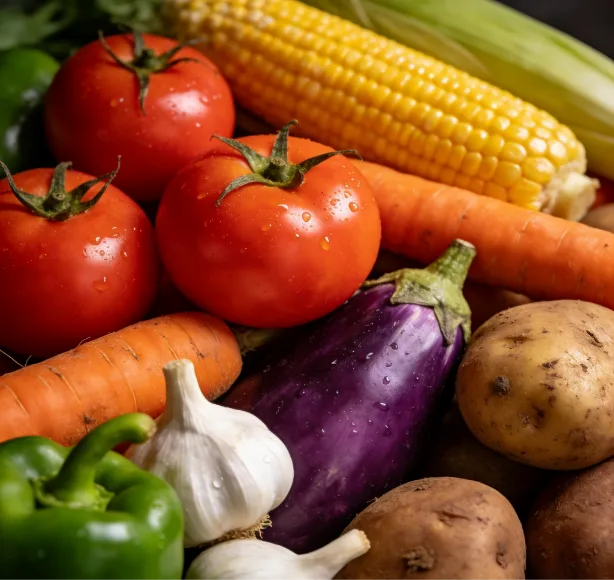
Vegetable prices will remain highly seasonal, with significant increases for tomatoes, leafy greens, and other varieties during winter and spring due to cold spells. Prices are likely to ease in summer as supply increases, though annual volatility is projected to narrow by 10–15% compared to previous years. The fruit market may see “stable bulk prices and rising premiums for high-end varieties.” While bulk varieties like Chilean cherries may face downward pressure due to abundant supply, high-value fruits such as blueberries and avocados are expected to see demand growth exceed 9%, supporting notable price premiums.
Specialty Products: Quality-Driven Price Increases
High-value medicinal herbs like astragalus may generate profits exceeding 20,000 yuan per mu, with dried forsythia priced at 45–70 yuan per kilogram. Specialty vegetables such as premium tomatoes and fruit cucumbers, when marketed off-season, could yield profits of up to 40,000 yuan per mu. Grains like buckwheat and quinoa are likely to see sustained price increases due to growing demand and limited planting areas.
III. Key Influencing Factors
Natural factors, including extreme weather, remain a significant risk. Strong cooling in the first quarter may cause crop frost damage, while ENSO transitions add climate uncertainty. High temperatures and droughts in key global production regions could also affect domestic prices. On the cost side, rising expenses for fertilizers and land transfers will provide a floor for prices. For example, soybean production may yield net profits as low as 500 yuan per mu, incentivizing farmers to shift toward higher-quality outputs. Technological advancements, such as a 4% increase in yields for major grains and a 35% boost for genetically modified soybeans, along with digital agriculture reducing waste, will partially offset cost pressures.
Policies will also play a critical role, with tools like minimum purchase prices, reserve rotations, and import quotas working in tandem. Agricultural insurance will expand nationwide, and full-cost and income insurance for soybeans will be widely implemented, stabilizing production expectations.
IV. Risk Warnings and Recommendations
Key risks include extreme weather triggering localized price spikes, slower-than-expected adjustments in hog capacity delaying price recoveries, and geopolitical tensions disrupting global supply chains. Market participants should adopt targeted strategies: grain producers should prioritize high-quality varieties and leverage second-half procurement windows; hog farmers should control inventory and reduce costs in the first half while optimizing sales timing later; fresh produce growers should aim for off-season marketing and enhance cold-chain storage management.
Overall, agricultural markets in 2026 are expected to operate within reasonable price ranges, supported by policies and market mechanisms. The shift toward higher quality, specialty products, and functional foods will be the primary drivers of price increases. Aligning with consumer upgrading trends and strengthening risk management will be crucial for stakeholders to capitalize on emerging opportunities.