“Food security is a major national strategic demand, and biological breeding is the core technology supporting this strategy.”
China’s grain output exceeded 1.4 trillion jin in 2024, yet grain imports surpassed 158 million tons, with an external dependence rate of 19%.
“Only by building an innovation ecosystem that deeply integrates industry, academia, research, and application, and seamlessly connects upstream, midstream, and downstream sectors, can we fully translate China’s leading advantages in basic research and gene mining into industrial superiority that safeguards national food security, ultimately achieving self-reliance in seed technology.”
These remarks were delivered by Wan Jianmin, an academician of the Chinese Academy of Engineering, at the 17th China International Seed Industry Expo and the 22nd National Seed Information Exchange and Product Trade Fair. In his report, he analyzed the current state of China’s grain production, systematically outlining the status and prospects of biological breeding from three perspectives: demand and challenges, latest research progress, and future development directions.
Demand and Challenges
Three Pressures on Food Security
Wan pointed out that China’s food security still faces challenges in ensuring quantity, quality, and nutrition.
-
In terms of quantity, although output has remained stable at over 1.4 trillion jin, demand continues to grow, and import dependence remains high.
-
In terms of quality, the premium rate of China’s agricultural products is only about 30%. “Hidden hunger,” such as iron-deficiency anemia, hypertension, and micronutrient deficiencies, poses serious challenges to public health.
-
In terms of resources and environment, China’s fertilizer and pesticide usage far exceeds that of developed countries, making it urgent to transition breeding toward “reduced input and loss.”
Moreover, the international competition landscape is concerning. Wan noted that the top five global seed companies control over 60% of the market share, with Bayer and Corteva, among others, holding 90% of the global intellectual property rights for genetically modified technologies. “China still relies on others for core patents in key technologies such as gene editing.”
Latest Progress
Breakthroughs in Resource Identification and Variety Development
In response to these challenges, China has made continuous efforts in biological breeding.
-
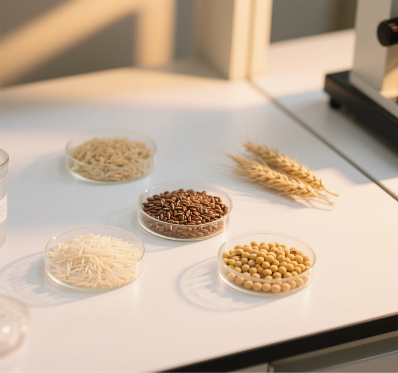
Precision identification of germplasm resources: Genotyping of 360,000 resources has been completed. During the 13th Five-Year Plan period, 17,000 germplasm resources were precisely identified, and another 18,000 have been completed since the start of the 14th Five-Year Plan. Among the 580,000 resources in the national inventory, 360,000 have undergone full-genome genotyping, with all corn inventory resources already completed.
-
Phenotypic identification, though more challenging, has been completed for 85,000 resources. These resources have been made available to enterprises and research institutions through various exhibitions, promoting the widespread application of disease-resistant, stress-tolerant, and high-quality resources.
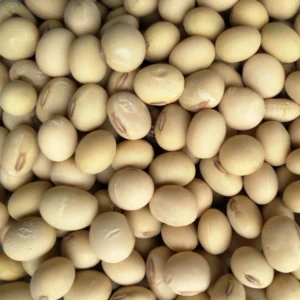
Wan highlighted that planting density is a key limiting factor for soybean yield improvement. His team has screened dense-planting-tolerant resources such as “Hedou 118” and “Mengdou 228,” laying the foundation for increasing domestic soybean yields.
Gene Resource Mining: From “One-by-One Cloning” to “Intelligent Large-Scale Mining”
From Mendelian genetics to molecular marker positioning, and then to genome-wide association analysis and pan-genomics, gene mining technology has now entered an efficient era driven by “AI + big data.”
“While a scientist might have cloned only one gene in a lifetime in the past, a graduate student can now clone one to two genes during their degree program,” Wan said. He noted that China has cloned numerous genes related to yield, quality, disease resistance, stress tolerance, and resource efficiency, placing its basic research at the world’s forefront.
Advances in Gene Editing, Genome-Wide Selection, and AI Design
-
Gene editing: China has broken the dependence on genetic transformation systems and established a transformation system independent of tissue culture. Breakthroughs have been made in key tools such as CRISPR-Cas12j, with the discovery of DNA boundary tools leading internationally.
-
Genome-wide selection: Although there is still a gap with multinational corporations, China has made breakthroughs in algorithms, and an engineering-based breeding system is初步 taking shape.
-
AI-driven breeding: China is catching up rapidly. The G2 intelligent breeding robot system developed by Dr. Xu Chao’s team at the Chinese Academy of Sciences, with related work published in Science, represents a major breakthrough in AI-designed breeding.
Breakthrough Varieties in Demonstration and Promotion
-
Rice: High-yield green rice, salt-alkali-tolerant rice, and early-maturing rice.
-
Wheat: Yangmai 53, which combines four scab-resistant genes, achieves both high resistance and high yield.
-
Corn: New varieties such as Dongke 1188 and Zhongdan 1130, as well as insect-resistant and herbicide-tolerant varieties like Tie 391K and Jingke 968D.
-
Soybean: Varieties such as Zhonghuang 203 and Tiedou 124 have increased yields by over 10%, with oil content reaching 22%. “Soybean yield improvement is on the verge of dawn.”
-
Rapeseed: Varieties like Zhongyouza 501 and Huayouza 158R have simultaneously improved oil content and yield.
Future Prospects
Building a Full-Chain Innovation System and Promoting Industrialization
“China’s biological breeding is entering a new stage characterized by deep multi-disciplinary integration, intelligent technology leadership, and full-chain system integration,” Wan said, outlining four major trends and one core task for the industry.
-
Application-oriented basic research: The disconnection between basic research and breeding practices is being bridged. Future basic research will focus more on key challenges in breeding, such as the central signaling pathways (e.g., photoperiod, hormone regulation) and molecular mechanisms of crop responses to environmental stresses like high temperature, drought, and pests.
-
Multi-disciplinary integration: The deep integration of biotechnology (BT), information technology (IT), and artificial intelligence (AI) is giving rise to a new paradigm of digital and intelligent breeding. AI will not only be used for gene mining and phenotype prediction but will also drive intelligent design breeding, enabling the precise and efficient development of “customized” varieties through digital modeling and global optimization of traits such as plant architecture, resistance, and quality.
-
Accelerated industrialization of biological breeding products: As policies improve and technologies mature, major products combining multiple favorable genes are moving from the laboratory to the field. Wan mentioned that next-generation corn with over 10 insect-resistant genes and soybeans with over five insect-resistant genes are already in production trials. Additionally, new varieties created through gene editing, such as herbicide-tolerant soybeans and high powdery mildew-resistant wheat, are poised to accelerate industrialization through policy “green channels.”
Wan emphasized that the fundamental guarantee for realizing this vision lies in building a full-chain innovation system encompassing “resources-genes-technology-products-industrialization.” This is a systematic project that no single research institution or enterprise can undertake alone. It requires breaking down barriers and establishing a “dual-drive” mechanism, where national strategic scientific forces and market-oriented enterprises collaborate closely. National laboratories and research institutions should focus on breakthroughs in cutting-edge and common key technologies, while enterprises should closely align with market demands, taking responsibility for variety testing, promotion, and application.