The principle of “low dosage effective, moderate dosage optimal, excessive dosage harmful” essentially translates “plant nutritional requirements” into the more intuitive language of “dose-effect”. This pattern is not subjective experience but is supported by three objective, fundamental laws:
-
Nutrient response curves are sigmoidal (“S”-shaped): From low to high dosage, there exists an “efficacy threshold” and a “benefit plateau”, not a linear increase.
-
Plants have a “physiological window” for ion concentrations: Exceeding this window triggers a triple defense mechanism: “uptake rejection, ion antagonism, and physiological toxicity”.
-
The soil-environment system has a “buffering limit”: Beyond this limit, excess nutrients leach out, causing secondary disasters like soil degradation and environmental pollution.
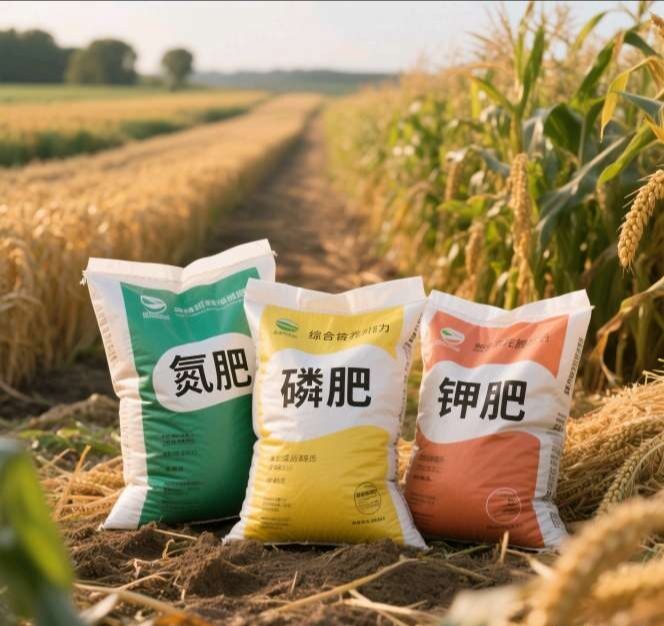
Connecting these three laws clearly explains why the three essential nutrients—Nitrogen (N), Phosphorus (P), and Potassium (K)—once they cross the “moderate” red line, transform from “yield-enhancing nutrients” into “ecological pollutants”.
I. Low Dosage Effective: The Steep Benefit Rise from ‘Deficiency’ to ‘Critical Value’
When soil nutrient levels are “below the critical value”, plants are in a state of “nutritional hunger”. At this stage, “supplementing a small amount of fertilizer” can break the growth bottleneck and achieve a leap in benefits.
-
Extremely High Marginal Returns: Below the critical nutrient value, each additional unit of nutrient can increase yield by 10–30 units, representing the stage with the highest input-output ratio.
-
The Plant’s “Starvation Mechanism”: Soil supply falls far short of plant demand, severely limiting core physiological processes:
-
Nitrogen (N) Deficiency: Limits synthesis of chlorophyll and the key photosynthetic enzyme Rubisco, leading to yellowing leaves and a sharp drop in photosynthetic efficiency.
-
Phosphorus (P) Deficiency: Simultaneously impedes the synthesis of ATP (the energy currency), nucleic acids, and phospholipids, halting growth in root tips and meristematic zones, stunting plants.
-
Potassium (K) Deficiency: Disrupts stomatal opening/closing and fails to activate enzyme active sites, significantly reducing crop stress resistance (drought, cold).
-
-
Visible “Fertilizer Efficacy Jump”: Supplementing just a small amount of nutrients can quickly alleviate these limitations, turning leaves green and promoting stem elongation, with direct and obvious effects.
II. Moderate Dosage Optimal: The Win-Win Zone of ‘Benefit Plateau’ and ‘Physiological Window’
When nutrient input reaches a “moderate” level, the plant, soil, and economic benefit are simultaneously in an optimal state. This is the balance point between “economic return” and “ecological safety”.
-
Yield Enters a Plateau: Further increasing nutrients yields less than a 5% gain in yield, but crop quality (e.g., grain protein content, fruit brix) and stress resistance (disease, lodging) continue to improve, maximizing comprehensive benefits.
-
Optimal “Three Balances” within the Plant:
-
Cellular Osmotic Balance: Regulated by potassium ions (K⁺), preventing cell dehydration or rupture.
-
Charge and pH Buffering Balance: Maintained by organic acid-base pairs formed with phosphorus (P) and nitrogen (N), ensuring intracellular environmental stability.
-
Carbon-to-Nitrogen (C/N) Ratio Balance: Maintaining a golden ratio of approximately 20:1 ensures efficient allocation of photosynthetic products to grains and fruits.
-
-
Soil is in a “Buffer Saturation” State:
-
Cation Exchange Capacity (CEC) is sufficient; potassium ions (K⁺) do not block the absorption channels for calcium (Ca²⁺) and magnesium (Mg²⁺).
-
Soil phosphorus fixation sites are largely saturated; excess phosphorus is fixed by iron (Fe) and aluminum (Al) ions and does not immediately leach away with water.
-
-
At this stage, the “input-output ratio” peaks, neither wasting nutrients nor damaging the environment—truly deserving the term “moderate dosage optimal”.
III. Excessive Dosage Harmful: Crossing the ‘Toxicity Threshold’, Triggering a ‘Cascade Spillover Effect’
When nutrient input exceeds the “moderate” red line, it causes triple damage to the plant, soil, and environment. Nutrients completely turn from “asset” to “burden”.
1. For the Plant: “Ion Stress” + “Physiological Antagonism”, Leading to Growth Disorder
-
Excess Nitrogen (N): Decreases the plant’s C/N ratio, leading to thinner cell walls, spindly growth, and significantly reduced resistance to pests and diseases. Concurrently, nitrate accumulation causes osmotic stress, resulting in water-soaked scorch spots on leaves.
-
Excess Phosphorus (P):
-
Zinc (Zn), iron (Fe), and copper (Cu) within the plant are complexed and precipitated by phosphorus, causing “induced deficiency” and chlorotic spots on leaves.
-
Excess nucleic acid synthesis leads to uncontrolled cell division, causing root tips to become thick and short, reducing absorption capacity.
-
-
Excess Potassium (K):
-
Primarily induces “magnesium antagonism”, causing interveinal chlorosis in older leaves (Magnesium is a core component of chlorophyll).
-
Further excess hinders calcium (Ca) absorption, leading to a high incidence of physiological disorders like blossom-end rot in tomatoes and bitter pit in apples.
-
2. For the Soil: “Chemical Imbalance” + “Microbial Shock”, Leading to Fertility Decline
-
When ammonium nitrogen content exceeds >300 mg/kg, rhizosphere pH plummets, solubilizing toxic aluminum (Al³⁺) and manganese (Mn²⁺) ions that directly harm roots.
-
When Olsen-P (available phosphorus) exceeds >60 mg/kg, soil becomes “eutrophic”, suppressing beneficial mycorrhizal fungi and increasing the proportion of pathogenic fungi, worsening soil-borne diseases (e.g., Fusarium wilt).
-
With continuous high potassium input, when the exchangeable potassium percentage exceeds >7%, soil colloids disperse, structure is destroyed, leading to compaction and poor water infiltration.
3. For the Environment: “Non-Point Source Pollution” + “Greenhouse Gases”, Sharply Increasing Ecological Risks
-
Excess nitrate (NO₃⁻) leaches with water, causing groundwater nitrate levels to exceed the drinking water standard of >10 mg/L, potentially leading to methemoglobinemia (“blue baby syndrome”) in infants.
-
When phosphorus concentration in surface runoff exceeds >0.02 mg/L, it can trigger “algal blooms” in rivers and lakes, causing hypoxia and fish kills.
-
Excess nitrogen undergoes denitrification, releasing nitrous oxide (N₂O). 1 kg of nitrogen can produce 0.01–0.05 kg N₂O, a greenhouse gas with 298 times the global warming potential of CO₂, exacerbating climate change.
IV. Practical Operational Mantra: Precise Nutrient Placement within the ‘Optimal Window’
“Soil testing is the ruler, the crop is the scale, the physiological window is the boundary, and the environment is the bottom line.”
-
Soil Test: Determine the nutrient baseline through soil analysis to avoid “blind fertilization”.
-
Crop: Adjust dosage based on crop type (e.g., cereals need more N, legumes need more P/K) and growth stage (e.g., high K demand during grain filling).
-
Window: Use the “physiological window” and “soil buffering limit” as boundaries; do not pursue “a little more for higher yield”.
-
Environment: Treat “no groundwater pollution, no algal blooms” as the bottom line, rejecting “trading short-term gains for ecological overdraft”.
Remember: The value of N, P, and K exists only within the dual windows of “physiology + ecology”. Once these boundaries are crossed, they flip from being “yield-boosting tools” to “ecological liabilities”. Only “moderate dosage” is the eternal optimal solution.