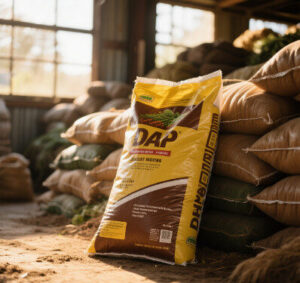

Australia’s fertilizer market, valued at US$2.7 billion in 2024, is projected to reach US$3.8 billion by 2033, growing at a compound annual growth rate (CAGR) of 3.5% during the 2025–2033 period, according to a recent report by the International Market Analysis Research and Consulting Group (IMARC).
This growth is underpinned by the expansion of diverse cropping systems—from large-scale grain and legume production in Western Australia and New South Wales to high-value horticulture in Victoria and Queensland. Export-oriented production of wheat, barley, canola, and cotton drives fertilizer investment to maintain yields and quality demanded by international markets. Emerging crops such as avocados and almonds in South Australia and the Murray-Darling Basin are further fueling demand for specialized nutrient management solutions that support root development, flowering, and fruit growth.
Key Market Trends and Drivers
1. Rapid Expansion of Organic Fertilizers
The Australian organic fertilizer market is set to surge from US$134.92 million in 2023 to US$254.37 million by 2032, at a CAGR of 7.3%. This growth reflects a accelerating shift toward sustainable and regenerative farming practices, with increasing farmer preference for products like compost, microbial agents, and plant-based amendments that improve soil health and minimize ecological impact.
2. Accelerated Growth of Liquid Fertilizers
Liquid fertilizers are gaining traction due to their high absorption rates, efficient nutrient delivery, and ease of application. Their water solubility enables precise fertilization tailored to real-time soil and crop needs, reducing waste and optimizing resource use—a critical advantage in irrigated systems like the Murray-Darling Basin and broadacre farming regions in Western Australia.
Soil Health as a Critical Driver
Australia’s naturally nutrient-deficient soils, particularly in Western Australia and the Northern Territory, make fertilization essential for maintaining soil fertility. Intensive farming has further exacerbated nutrient imbalances. Sandy acidic soils in southern and coastal regions, prone to nutrient leaching, are driving demand for micronutrients such as zinc, boron, and manganese, supplementing traditional compound fertilizers to support long-term soil health.
Government and Corporate Investment
Government initiatives—including rural development grants, soil improvement programs, and agricultural extension projects—encourage optimized fertilizer use to maximize yields while supporting environmental sustainability. Subsidies for precision agriculture equipment, soil testing, and new variety trials further contribute to market expansion.
Agribusinesses are investing in R&D and field trials for slow-release fertilizers, bio-fertilizers, and specialized products adapted to Australia’s diverse soils and climate. Environmental programs, such as the Great Barrier Reef protection plan, promote controlled-release formulations and precision application to reduce nutrient runoff, aligning ecological responsibility with long-term agricultural productivity.
Market Shifts Toward Low-Emission Choices
The Australian fertilizer industry is actively exploring low-emission alternatives amid government plans to achieve a 62%–70% reduction in greenhouse gas emissions by 2035 from 2005 levels. While the federal agricultural and land sector plan lacks specific incentives for sustainable practices, industry stakeholders are divided on the role of subsidies.
According to the Climate Change Authority, fertilizer use accounts for 7% of the agricultural sector’s CO₂ equivalent emissions, largely in the form of nitrous oxide. Coated urea and inhibitors targeting urease or nitrification can reduce these emissions by over 50%.
Organizations such as Grain Growers advocate for grants, tax incentives, or financial mechanisms to encourage adoption of sustainable fertilizers. However, the Australian Bureau of Agricultural and Resource Economics and Sciences warns that subsidizing fertilizers could exacerbate soil imbalance and nutrient leaching, potentially increasing emissions.
Decarbonization Initiatives in Production
Several projects are underway to lower emissions from fertilizer manufacturing. Wesfarmers Chemicals, Energy and Fertilisers has completed a feasibility study on decarbonizing its 300,000 t/yr ammonia plant and aims to double ammonia capacity to replace imports. Perdaman Chemicals and Fertilizers’ 2.3 million t/yr Ceres project, set to begin operations in 2027, will use natural gas from Woodside’s Scarborough project and include a 100 MW solar facility to reduce carbon footprint.
The government is also considering a carbon border adjustment mechanism to mitigate carbon leakage risks, which the Fertilizer Australia association says could raise fertilizer prices but support local production.
It is worth noting, however, that switching to renewable energy in production does not address nitrous oxide emissions after fertilizer application.
Outlook
With agriculture expected to account for 37% of Australia’s emissions by 2050 as other sectors decarbonize faster, the push for efficient, climate-responsive fertilizers will remain a central theme in the country’s evolving agricultural landscape.