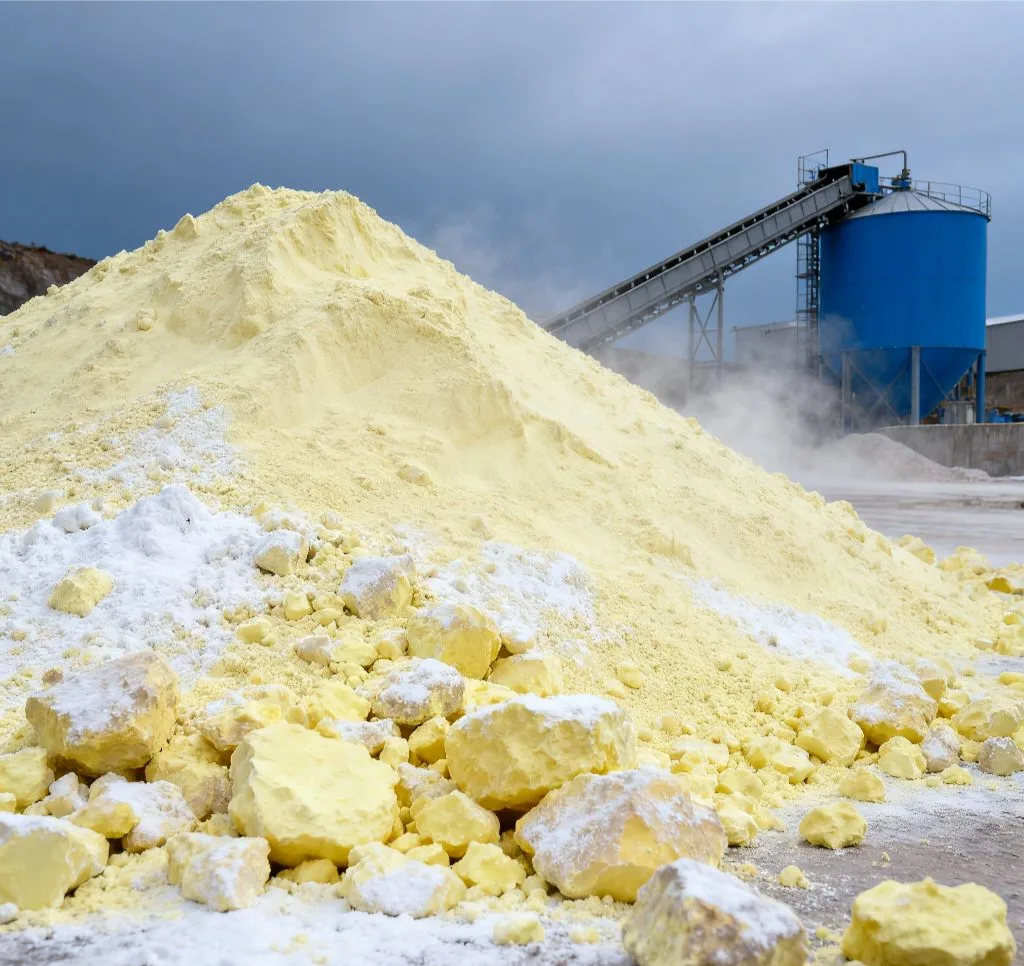
This week brought a major adjustment to the sulfur market. After prices broke through the RMB 10,000/ton barrier and staged a frenzied rally, the market saw a significant pullback following the news of the U.S.-Iran memorandum of understanding. However, given that the domestic supply shortage cannot be reversed in the short term, near-month spot prices remained relatively strong. The extent of the pullback, compared to the scale of the rally, still appears modest, with bids finding support below—though most participants remained cautiously on the sidelines.
The key question now is: Has sulfur price peaked and begun a reversal?
Fundamental Supply: Multi-Layered Shocks Persist
Global sulfur supply has suffered multiple severe disruptions. Several Middle Eastern refineries remain offline due to war damage, with annual production losses estimated at approximately 40% of global supply—and recovery timelines vary widely. This has created an irreversible tightness expectation at the fundamental supply-demand level.
Middle Eastern sulfur accounts for 40%–60% of China’s imports, and arrivals from the region in January–May 2026 plummeted by over 75% year-on-year. Meanwhile, Russia extended its sulfur export ban through the end of June, further tightening the global sulfur distribution system.
Customs data for April 2026 showed China’s sulfur imports at just 295,500 tons—a 72.39% year-on-year plunge and a monthly low unseen in recent years. Cumulative imports for 2026 stood at 1.8456 million tons, down 48.12% year-on-year. May import volumes are estimated at 350,000–400,000 tons, still far below normal levels.
National sulfur port inventories have been steadily drawing down since the start of the year, from 1.91 million tons to approximately 750,000 tons as of June 18—a year-on-year decline of over 65%. Inventories are at historic lows and continue to shrink. Future vessel arrival schedules remain relatively sparse, and available circulation resources are expected to tighten further.
Domestic supply has also contracted. Some Chinese refineries have received maintenance approvals, and current weekly sulfur production stands at roughly 184,000 tons—down 40,000 tons from early June, with capacity utilization falling from 50% to 43%. Moreover, most production is being prioritized to supply the phosphate fertilizer sector, meaning market-available supply is declining sharply. The recent price retreat was largely driven by sentiment-driven selling and panic liquidation, not a fundamental reversal of supply tightness.
Geopolitical Factors: Ceasefire Is Not Yet Certain
While the U.S. and Iran signed a memorandum of understanding, a full ceasefire still requires 60 days of negotiations. During this period, the risk of renewed conflict remains—and Israel remains a wild card that could intermittently strike Lebanon and obstruct the negotiation process. Moreover, questions over toll collection management in the Strait of Hormuz could resurface. Shipping companies remain deeply concerned about regional conditions; mine clearance, bottleneck clearing within the Gulf, and rescheduling of vessel routes all take time. A swift return to pre-war traffic levels through the strait is nearly impossible—even if the 60-day negotiations proceed smoothly.
Demand Side: Phosphate Policy Support Continues
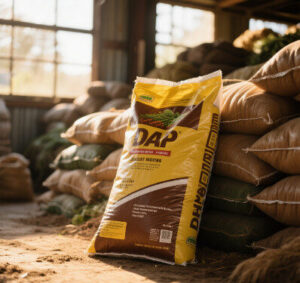
On the demand front, the phosphate fertilizer policy guidance that had earlier ignited the market continues to hold. This week, industry associations raised phosphate fertilizer guidance prices again. The core logic remains unchanged: restoring producer profitability to improve operating rates in preparation for autumn fertilizer demand. This strategy appears to be showing some effect—MAP operating rates have recovered from a low of approximately 43% to 48%. DAP rates show less change but show signs of stabilization. Overall, the demand recovery path for phosphoric acid appears clearer. Whether from sulfur-burning acid, ore-based acid, or smelter acid, average support is present.
For other chemical sectors, without notable profit improvement, negative feedback may persist. However, as the international situation eases and the market anticipates lower sulfur prices in the long term, downstream buyers are more confident in holding out, which in turn supports demand. The new energy sector, a key growth driver throughout this period, continues to show month-on-month demand growth.
Outlook: Has the Peak Been Reached?
Looking ahead, sulfur prices face downward risk as geopolitical tensions continue to cool, but this is primarily sentiment-driven. The fundamental support has not yet significantly weakened and may even accelerate the supply-demand gap in the short term, with near-month and forward price spreads widening further.
In the near term, market participants should watch for the timing of demand re-entry after sentiment stabilizes. The extent of price correction should not be viewed with excessive optimism.
Returning to the initial question—has sulfur price reversed?
A cyclical peak is clear. The RMB 10,000/ton-plus highs were driven by the convergence of all bullish domestic and international sentiment. Given that one of these bullish factors has weakened and could potentially reverse, a peak has indeed been reached.
However, from a fundamental perspective, sulfur has been on an irreversible path of declining supply and rising demand since the second half of last year. The long-term development trajectory of new energy replacing fossil fuels requires the extraction of new energy materials from fossil fuel feedstocks. This inherent byproduct nature of sulfur means the supply-demand gap is destined to widen. While this is the current reality—and future alternatives are impossible to predict—the fundamental logic of long-term sulfur price appreciation remains intact. The conflict simply accelerated and brought forward a future that was already in motion. With the war winding down, the pre-mature price explosion may slow, but it may not change the inevitable trajectory of the years ahead.