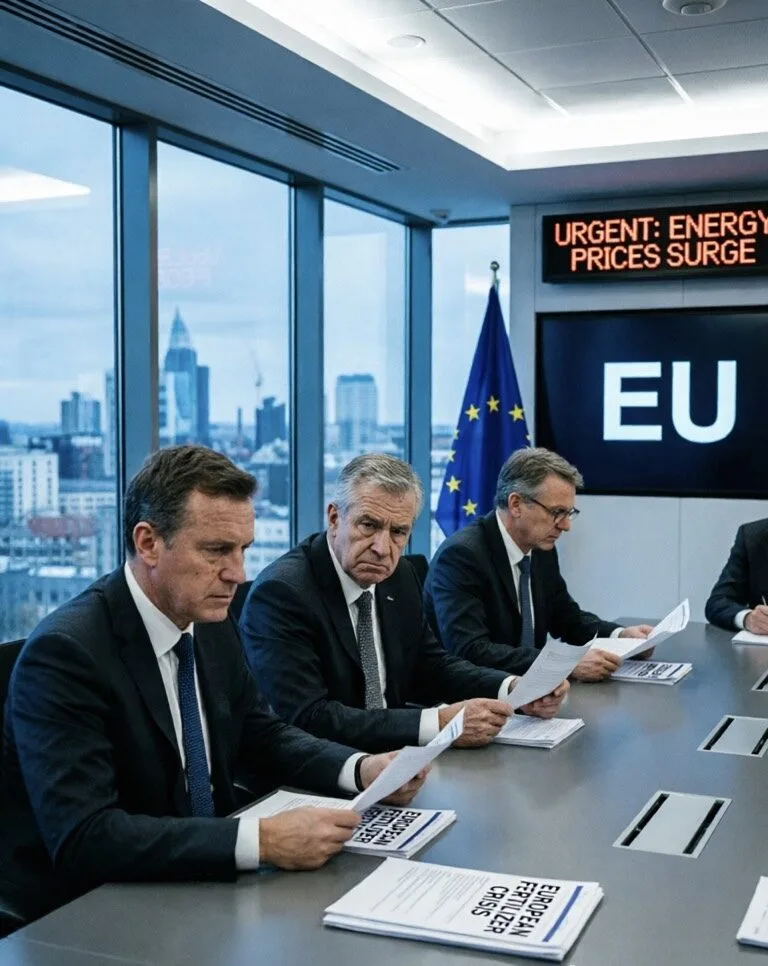
Since the outbreak of the Middle East conflict, Europe’s fertilizer industry has been grappling with its most severe crisis in a decade. As a natural gas-intensive sector, the region has seen over 40% of its domestic ammonia production capacity either idled or reduced, while surging fertilizer imports continue to squeeze the market share of local producers. Faced with structurally higher gas prices than the global average and mounting pressure from EU carbon reduction policies, European fertilizer companies are being forced into capacity restructuring, feedstock substitution, and technological upgrades.
Energy Cost Inversion Breaks Profitability Floor
European natural gas prices have persistently exceeded those in the United States and the Middle East, directly inflating fertilizer production costs. For ammonia production, natural gas accounts for 70%–80% of total manufacturing costs. The natural gas cost for producing one ton of ammonia in Europe is $250–300 higher than in the United States—a gap that widened further in the first quarter of 2026.
Against this backdrop, several European fertilizer giants have announced permanent closures or temporary idling of domestic facilities. Yara International shuttered two aging ammonia plants in the Netherlands and Italy, while CF Industries Holdings reduced ammonia capacity at its Billingham site in the UK by two-thirds.
Simultaneously, European fertilizer companies are accelerating new capacity builds in North America and Africa. Yara has signed a long-term gas supply agreement with a U.S. natural gas company and plans to build a new 800,000-ton-per-year ammonia unit in Louisiana. The stark contrast between domestic shutdowns and overseas expansions underscores the region’s industrial exodus.
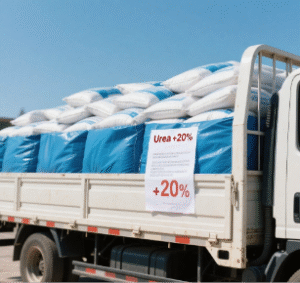
Trade flows have also reversed. Europe’s nitrogen fertilizer market, once largely self-sufficient, has seen import dependence surge from roughly 10% in 2020 to nearly 30% in 2026. Urea and ammonium nitrate from Egypt, Trinidad and Tobago, and the United States now flow into European ports in large volumes, priced 15%–20% below locally produced products—offering European farmers cheaper fertilizer options.
CBAM Impact Continues to Mount
The EU Carbon Border Adjustment Mechanism (CBAM) entered full implementation in 2026, with fertilizers among the first industries covered. Under the rules, importers must purchase carbon certificates for embedded emissions, priced in line with EU carbon allowance markets.
However, the mechanism has not eliminated—and may even have exacerbated—the competitive disadvantage of domestic producers. While European ammonia producers are already bearing high natural gas costs, they must also pay additional carbon allowance fees. Imported fertilizers, though also subject to carbon certificate purchases, originate from countries where natural gas prices are far lower, leaving their total cost structure still advantaged.
Estimates suggest that the carbon cost for European ammonia currently stands at €40–50 per ton, compared to €35–40 per ton for imported fertilizers—a relatively narrow gap. But with European gas prices running $200–250 per ton above those in exporting countries, the overall cost disadvantage remains substantial.
More worryingly, EU carbon allowance prices are expected to rise steadily under CBAM, potentially breaching €120 per ton by 2027, further widening the cost gap for domestic producers.
Some European fertilizer companies are exploring carbon capture and storage (CCS) to lower their carbon costs. A Norwegian ammonia plant has launched a demonstration project capturing 200,000 tons of CO₂ annually, with the captured gas used for urea production or stored in North Sea saline aquifers. Yet CCS projects have long payback periods and require extensive transport and storage infrastructure—investments few companies are willing to shoulder in today’s market environment. Industry consensus holds that CBAM must include subsidies for low-carbon domestic production; otherwise, it cannot reverse the trend of capacity relocation.
Industry Bets on Diversified Technology Pathways
Faced with structural disadvantages in natural gas pricing, some European companies and research institutions are accelerating exploration of non-fossil ammonia production technologies.
Green hydrogen-based ammonia is among the most promising directions. This route uses renewable electricity to produce hydrogen via water electrolysis, which then reacts with nitrogen to form ammonia—entirely eliminating natural gas consumption with near-zero carbon emissions. However, the economic hurdles are steep: current green hydrogen costs range from €6–8 per kilogram, compared to €2–3 per kilogram for natural gas-based hydrogen. Green ammonia will only become commercially viable when renewable power falls below €30/MWh and electrolyzer capital costs decline further.
Nordic and Spanish companies have already launched pilot green ammonia projects. A Swedish firm is building a 50,000-ton-per-year green ammonia demonstration plant using wind power and electrolyzers, scheduled to start production in 2028, with output destined for carbon-free fertilizer and marine fuel markets. A Spanish fertilizer company is partnering with a solar farm developer to test a hybrid model—producing hydrogen from solar during the day and using grid power at night.
Another pathway is biomass gasification. Using agricultural waste, forestry residues, and other biomass feedstocks, this route produces syngas through gasification, which is then converted to ammonia. Feedstock costs are relatively low, but gasification plants require high capital investment and stable, large-scale biomass supply. A German chemical park has initiated a feasibility study to produce 50,000 tons of ammonia annually from local straw and waste wood.
While these alternative technologies cannot replace the natural gas route in the near term, they offer options for long-term decarbonization. Without decisive action, Europe’s ammonia sector could see domestic capacity cut in half, leaving the region increasingly dependent on external markets for its fertilizer supply.