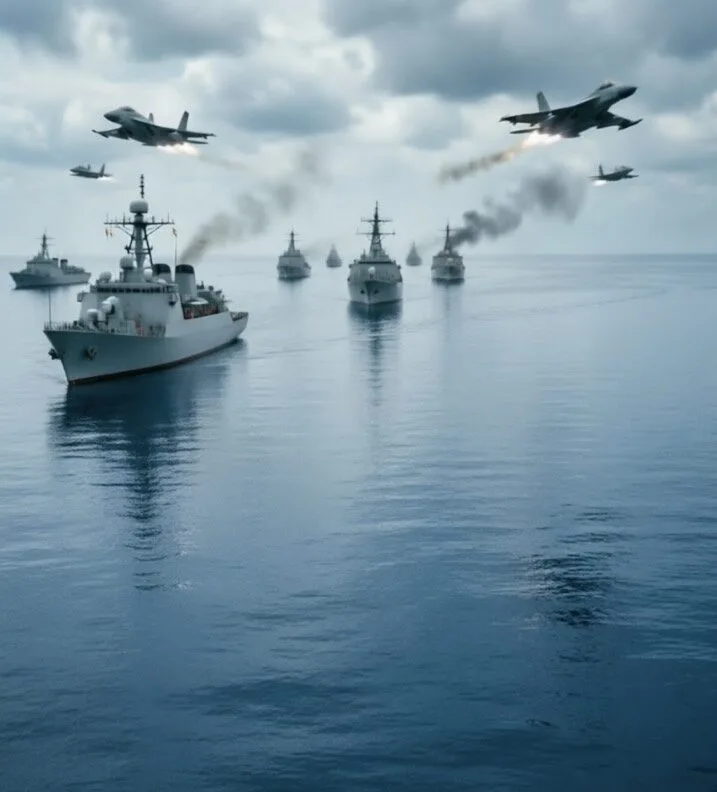
President Donald Trump announced on social media on June 14 that the U.S.-Iran agreement was “now complete” and would reopen the Strait of Hormuz. Trump said he had formally approved the opening of the strait without tolls and ordered the immediate lifting of the U.S. naval blockade on Iranian ports. Early on June 15, Iran’s Supreme National Security Council Secretariat issued a statement formally announcing that Tehran and Washington had finalized the text of a memorandum of understanding on “ending war negotiations,” with formal signing scheduled for June 19.
But for the global fertilizer industry—which relies on the strait for over 40% of seaborne sulfur shipments and critical Middle Eastern ammonia and phosphate raw materials—the question is not when the announcement comes, but when commercial traffic will truly normalize. Market experts draw a sharp distinction between “technical reopening” and “commercial reopening,” and the timeline for the latter may be measured in months, not days.
Part 1: What Counts as Truly “Open”?
According to Rahul Kapur, head of shipping and metals at S&P Global Commodity Insights, the market strictly differentiates between “technical opening” and “commercial opening.” The latter depends on security guarantees, the return of affordable insurance, and the rebuilding of market confidence.
A recent S&P Global report synthesized industry consensus on five core conditions that must be met before international markets will recognize the Strait of Hormuz as genuinely open:
-
Full recovery of vessel traffic – Ships operated by diverse stakeholders—international oil majors, traders, and national oil companies—must pass through the strait steadily, with volumes reaching 50%–90% of pre-conflict levels and remaining stable for one week to one month.
-
Orderly and uninterrupted passage – A 30- to 45-day observation period is widely expected to confirm that hostilities have fully ceased, with no intermittent disruptions and safe, accident-free maritime navigation restored.
-
Available and accessible marine insurance – Insurance availability is a core metric of normalized traffic. Without it, shipowners will not risk transiting the strait.
-
Complete physical safety – Navigational hazards such as sea mines must be fully cleared, and the maritime security system must be demonstrably operational, providing a reliable environment for vessels.
-
Return of international fleet operations – Very Large Crude Carriers (VLCCs) and other major vessels must resume normal port calls and loading operations in the Gulf region.
Part 2: Where Does Shipping Stand Now?
Before the conflict, approximately 20 million barrels of oil passed through the Strait of Hormuz daily—about one-fifth of global seaborne oil trade. After more than three months of conflict, shipping industry estimates suggest that roughly 500 merchant vessels remain stranded in the Gulf, with traffic reduced to a trickle.
Some vessels have adopted “dark sailing”—transiting with Automatic Identification Systems (AIS) turned off—to avoid restrictions. Lloyd’s List reported on June 9 that 166 non-Iranian vessels had transited the strait with AIS disabled since the conflict began, including 90 tankers. Meanwhile, ship-to-ship transfers of fossil fuels between the strait and vessels anchored in the Gulf of Oman have continued in covert operations.
According to Kpler estimates, approximately 1.9 million barrels per day of crude oil entered the Gulf of Oman via ship-to-ship transfers since early April—a figure JPMorgan estimated reached 2.1 million barrels per day by late May. Yet even that amount represents only a fraction of the pre-war daily traffic of approximately 15.6 million barrels of crude oil through the strait.
Iran’s Fars News Agency reported on June 16 that several Iranian oil tankers and supply vessels “successfully crossed the maritime blockade” during the early hours. Tasnim News Agency also reported that three tankers and two vessels carrying vital Iranian goods had “broken through the naval blockade.”
Part 3: How Long for Full Recovery?
Once the strait reopens, stranded VLCCs will be the first to depart. Gulf nations are eager to export crude, as the blockade has been causing massive financial losses. A flood of crude will re-enter the seaborne market, but logistics for carrying export oil will face immediate challenges.
Lars Basta, CEO of Frontline Tankers (based in Cyprus), believes that if a credible U.S.-Iran agreement is reached, traffic could recover noticeably from the current 5–10 vessels per day, but a return to pre-conflict levels of 130–140 vessels daily will not happen quickly.
Richard Meade, editor-in-chief and senior analyst at Lloyd’s List, told Xinhua that even under ideal conditions—including the restoration of traditional shipping lanes—it would take weeks or even months to eliminate the crisis’s impact on the shipping industry. “If shipping resumes, oil tankers will be given priority because oil prices are critical,” Meade said. “Getting already-loaded tankers out of the Gulf is the top priority, then ballast tankers need to enter—refinery restarts take days or even weeks.” The redeployment of container ships and dry bulk carriers, he added, will take months.
Simon Henry, a senior industry veteran and former executive director of Shell, told reporters that even after a U.S.-Iran deal, restoring smooth oil and gas supply chains could take 6 to 12 months. Meanwhile, some gas liquefaction facilities, refineries, and petrochemical plants—particularly in Qatar and the UAE—have been damaged, and downstream capacity recovery may take even longer.
The Fertilizer Factor: A Gradual, Bottlenecked Recovery
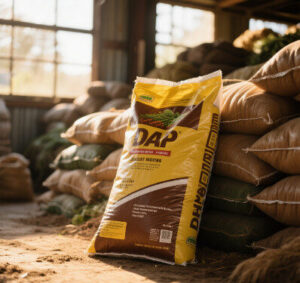
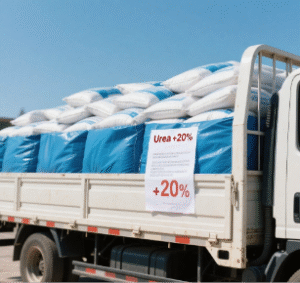
For the fertilizer industry, the outlook is particularly constrained. According to Caixin, market observers expect fertilizer shipping recovery to be a gradual process—even as trade conditions become clearer—because hundreds of vessels laden with diverse cargoes stranded in the region will have to compete for limited passage opportunities.
Fertilizer vessels—carrying sulfur, ammonia, urea, and phosphate raw materials—do not command the same priority as oil tankers. As Meade noted, loaded oil tankers will be cleared first, followed by ballast tankers needed to restart refineries. Fertilizer carriers, along with container and dry bulk ships, will likely face extended queues and scheduling delays that could stretch into months.
Moreover, the physical infrastructure for fertilizer production in the region has suffered. Qatari and Emirati facilities—key suppliers of ammonia and other intermediate fertilizer materials—have sustained damage that may require significant time to repair. Downstream fertilizer production capacity in the Gulf may not return to normal until well into 2027, even under the most optimistic scenario.
Outlook: Patience Required
While the June 19 signing ceremony marks a crucial diplomatic milestone, the commercial reopening of the Strait of Hormuz for fertilizer shipping will require far more than ink on paper. The five core conditions outlined by S&P Global—traffic volume recovery, observation period for ceasefire confirmation, insurance availability, physical safety, and fleet return—must all be met.
For fertilizer buyers in Brazil, India, Europe, and elsewhere, the message is clear: even with a peace deal, substantial delays in sulfur, ammonia, and phosphate shipments are inevitable. The thousands of tons of cargo stranded in the Gulf will take time to untangle, and the downstream production facilities that depend on those inputs may not operate at full capacity for many months.
The Strait of Hormuz may be technically open, but for fertilizer—as for so many other commodities—true commercial passage is still a long way off.