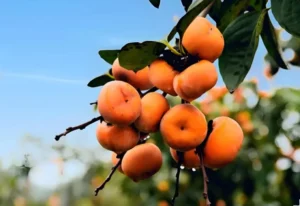
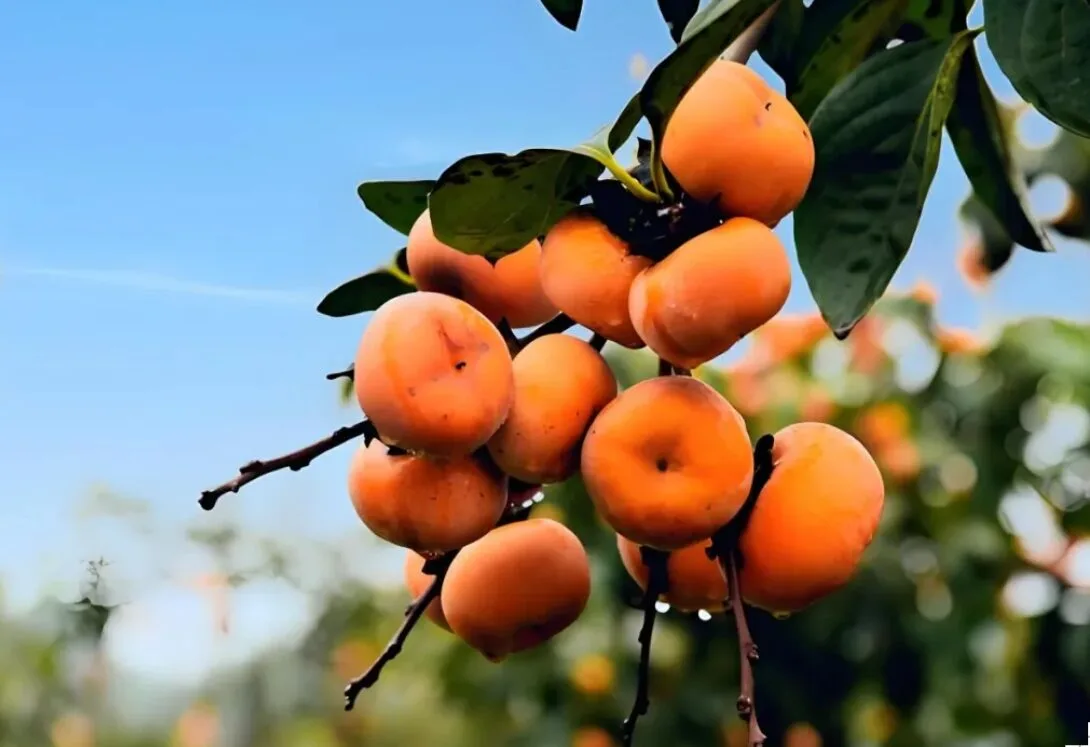
GUILIN, Guangxi – As the sugar mandarin boom fades and Wogan oranges enter a phase of cutthroat competition, Guangxi’s agricultural input market is searching for its next anchor. Compared with sugarcane, jasmine, passion fruit, or the newly popular crunchy kumquat, Gongcheng persimmon may seem low-key — it lacks the massive 7-million-mu scale of citrus and rarely generates viral attention. Yet this “niche” crop may hold one of the most overlooked growth opportunities in the agrochemical sector.
As China’s “Hometown of Persimmon,” Gongcheng County reached 283,600 mu of persimmon planting area by 2025, with output of 1.0146 million tons and a comprehensive output value exceeding RMB 8 billion. Its brand value climbed to RMB 6.112 billion, ranking first among all counties nationwide.
Against a backdrop of strict pesticide residue controls at export bases, expansion of green food raw material bases, soil degradation in old orchards, and mounting pest resistance, Gongcheng persimmon is transitioning from “experience-based planting” to “standard-based planting.” Demand for soil testing, biological agents, green pest control, and mountain-area aerial spraying is rising rapidly.
For pesticide and fertilizer companies, this may not be the most crowded red ocean — but it could be the next niche blue ocean worth positioning in early.
Solid Foundation: Scale and Geographical Indication as Dual Moats
The rise of Gongcheng persimmon is rooted in deep industrial accumulation.
With Lianhua and Xiling townships at the core, the county has formed multiple standardized planting belts at the 10,000-mu level, achieving significant economies of scale. Data shows average yield holds steady at around 3,600 kg per mu, with output value exceeding RMB 9,000 per mu — a testament to the industry’s resilience.
In terms of variety structure, the county has built a diversified system combining astringent and sweet persimmons, successfully introducing premium varieties such as Taishu sweet persimmon during the 14th Five-Year Plan period.
More notably, the county has established 100,000 mu of national green food raw material standardized production bases and 24 standardized demonstration sites. In 2017, the “Gongcheng Persimmon Cultivation System” was inscribed as a China Important Agricultural Heritage System. This dual moat of hard scale and soft culture distinguishes Gongcheng persimmon from ordinary local specialties and gives it strong risk resistance.
Four Clear Pain Points: Pests and Old Orchards Squeeze Growers
Though modest in scale, Gongcheng persimmon faces obvious bottlenecks at the planting level — which is precisely where agrochemical products can intervene.
First, complex and frequent pests and diseases. Anthracnose outbreaks during hot, humid seasons cause fruit drop. Scale insects, with thick waxy layers and short nymph stages, are difficult for conventional pesticides to penetrate. Mosaic leaf disease occurs during fruit-setting and often interacts with soil acidification, making it one of the most stubborn local diseases and demanding copper-based and specialized bacterial treatments.
Second, degradation of old orchards. Some production areas have older trees, and continuous cropping has led to soil compaction, acidification, and replanting obstacles. Dead trees, fruit cracking, and uneven coloring directly affect marketable rates.
Third, high management costs in mountainous areas. Some orchards are located on steep terraced slopes where large machinery cannot enter, driving up labor costs for spraying and fertilization and creating demand for lightweight, mechanized equipment.
Fourth, dual climate and market risks. Autumn continuous rain directly affects persimmon cake processing and drying, while concentrated fresh fruit harvests bring price volatility and income uncertainty for growers.
Emerging Landscape: Brand Leaders Move Downstream, Solution-Based Services Take Center Stage
As Gongcheng persimmon advances toward green food standardized production, the agrochemical market is evolving from “farmers buying pesticides” to “brands and distributors providing full-cycle solutions.”
On the fertilizer side, the upgrade from bulk fertilizers to specialty fertilizers has attracted numerous domestic and international players.
In basic fertilizers, Xinyangfeng has entered with its “Yangfeng Zhizun” neutral fertilizer, positioned to regulate acidic soil and alleviate mosaic leaf disease. Sinochem’s “Fudao” polyzinc value-added compound fertilizer, known for improving nutrient utilization and soil friendliness, is promoting balanced and high-potassium application models for Gongcheng persimmon to support stable yield and quality. Yantai Zhongde is promoting Shuangtaike long-acting compound fertilizer to address the crop’s long phenological period and continuous nutrient demand, helping growers save labor while ensuring sustained supply.
In specialty fertilizers, domestic leaders including Yuntianhua and Kingenta, as well as international brands such as K+S’s Red Bull potassium sulfate and magnesium compound fertilizers and the UK’s OMEX, have entered the persimmon market with functional products — medium and trace elements, magnesium, and high potassium — targeting key stages including fruit expansion, coloring, and stress resistance.
On the crop protection side, branding trends are equally evident.
Syngenta has introduced Amistar and Amistar Top solutions to Gongcheng since 2011, effectively addressing anthracnose-related fruit drop. In recent years, its precision combination program for mosaic leaf disease has been promoted across more than 20,000 mu locally.
BASF’s Baitai and Ruishou fruit aroma products have demonstration and promotion foundations in Gongcheng. Limin Group, a veteran domestic fungicide company, has included Gongcheng in its “Hundreds, Thousands, Ten Thousands” agricultural science project pilot, developing a “Limin Lingyue+” combination service program around persimmon disease patterns, supported by field guidance and green pest control training.
Notably, Shaanxi Xida Huate, a leading domestic company in bacterial disease control, has widely promoted its core product Xisha® (3% thiamethoxam) in major persimmon production areas such as Lianhua Township in recent years. With high safety, strong systemic activity, good compatibility, and a broad bactericidal spectrum, it has become a representative domestic product for controlling bacterial diseases including mosaic leaf disease (angular leaf spot) and certain fungal diseases.
In addition, products such as ADAMA’s HuiRun® are also well recognized by growers for controlling anthracnose and mosaic leaf disease.
Overall, competition among leading companies has shifted from single-product price wars to comprehensive service competition — “soil testing + products + green pest control + farmer training.” Those who can help growers meet residue limits and increase first-grade fruit rates will secure their position in the persimmon sector.
Conclusion
Amid fluctuations in the citrus industry, Gongcheng persimmon offers a highly valuable reference case: an old production area does not equal low value. As long as technology reshapes the planting end and branding leverages the processing end, traditional crops can also grow into major industries. For the agrochemical sector, this “orange name card” — persimmon — is becoming an incremental track that companies cannot afford to ignore in deepening their presence in Guangxi.