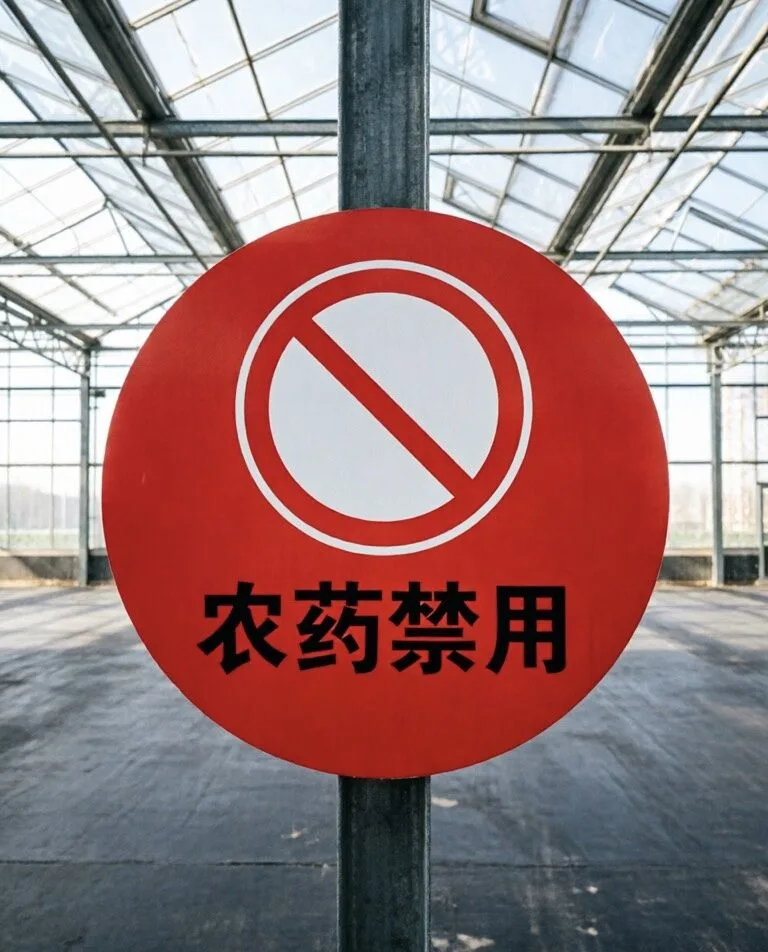
On June 1, 2026, four highly toxic pesticides—omethoate, carbofuran, methomyl, and aldicarb—were completely banned from sale and use in China. Together with the four products already withdrawn in September 2024—phorate, isofenphos-methyl, isocarbophos, and ethoprophos—a total of eight highly toxic pesticides have been eliminated from the market over the past two years, bringing the national list of banned pesticide varieties to approximately 60 in total.
This is not a sudden “emergency brake” but a carefully designed, phased withdrawal.
Why a Phased Approach?
Looking back at the withdrawal path, both batches of highly toxic pesticides followed a two‑step strategy: “production halt first, then use ban.” The first four had their registrations revoked and production banned from September 2022, granting a two-year transition period. The second four were prohibited from production from June 2024, also with a transition of roughly two years.
This arrangement reflects practical considerations rather than administrative inertia. Highly toxic pesticides still maintained usage inertia in certain regions and for certain crops. An abrupt ban could leave farmers unprepared, potentially triggering a rebound in illegal pesticide use. The transition period served both to allow companies to clear inventory and to provide a window for promoting alternatives.
Aluminum phosphide and chloropicrin were handled with even greater nuance—rather than a blanket ban, their application scenarios were narrowed from 2025 onward, restricted to stored-grain pest control and soil fumigation, and only to be carried out by trained professionals. For these fumigants, which have no ideal substitutes in grain storage and certain soil treatments, a total ban could carry a higher cost than risk management. The policy chose “control” over “prohibition,” demonstrating a pragmatic approach.
What Is Being Phased Out?
By category, the phase-outs are highly concentrated, with highly toxic organophosphates and carbamates being the main targets. Both categories share common traits: high toxicity, prolonged residues, and significant harm to non-target organisms.
Carbofuran and aldicarb (carbamates) were once primary agents for soil pest control, but their high toxicity to pollinators such as bees has long been warned against by researchers. Omethoate and methomyl—classified as moderately toxic—still present acute poisoning risks under high-dose scenarios, and their metabolic byproducts cannot be overlooked.
The other side of the phase-out is the availability of alternatives. Agricultural authorities have recommended alternatives including triflumezopyrim, spinetoram, nitenpyram, indoxacarb, abamectin, pymetrozine, and Bacillus thuringiensis. Among these, abamectin and pymetrozine have already achieved broad application in many regions with relatively mature technology. However, certain alternatives still face practical barriers in specific scenarios regarding efficacy and cost, which remain real bottlenecks for grassroots promotion.
Why Is This Elimination Inevitable?
On the surface, this appears to be routine pesticide management. But beneath the surface, at least three pressures are driving the move:
1. Baseline requirements for agricultural product quality and safety
China’s Pesticide Management Regulations explicitly prohibit the use of highly toxic pesticides on vegetables, fruits, tea, edible fungi, and medicinal herbs. In practice, however, violations persist. The continued expansion of the banned list essentially compresses the space for non-compliant practices.
2. Binding international commitments
China is a signatory to multiple international conventions, including the Stockholm Convention on Persistent Organic Pollutants (POPs). The elimination of POPs-type pesticides is a binding commitment. Many highly toxic pesticide varieties exhibit environmental persistence, and their withdrawal aligns with international alignment obligations.
3. Alternative technologies have crossed the critical threshold
A decade ago, when methamidophos and parathion were phased out, substitute products were still immature. Today, the supply of low-toxicity, high-efficiency pesticides can essentially cover most major application scenarios. Technological maturity provides the foundation for policy advancement.
The Real Challenge Has Only Begun
Behind the number of 60 banned pesticides, the true challenge lies not in “banning” but in “management.” After highly toxic pesticides are withdrawn, gray-market channels may still engage in inventory clearance and cross-regional transfers. In certain cash-crop cultivation areas, farmers’ path dependency on highly toxic pesticides will not disappear overnight with a single announcement.
From a longer-term perspective, this round of phase-outs is only the beginning. The Ministry of Agriculture and Rural Affairs continues to update its list of restricted and prohibited pesticides dynamically, and more high-risk varieties are likely to be included in future withdrawal plans. Each phase-out represents a fine-tuning of agricultural production methods—costs are borne in the short term, while benefits accrue in the long term.
For the June 1 milestone, rather than an endpoint, it is better understood as a signal: the role of highly toxic pesticides in Chinese agriculture is being irreversibly compressed.