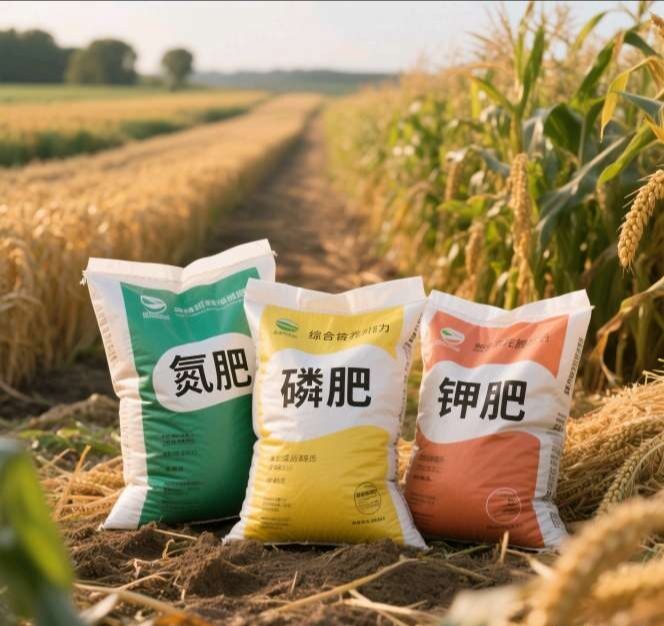
Domestic compound fertilizer markets in China maintained firm sentiment on June 19, with producer price ranges holding steady amid rising feedstock costs and cautious downstream buying.
Compound Fertilizer: Firm on Cost Support
Mainstream ex-works quotations:
| Grade | Price Range (RMB/ton) |
|---|---|
| 45% sulfur-based (15-15-15) | 3,350–3,650 |
| 40% chlorine-based (30-5-5) | 2,050–2,350 |
| 45% chlorine-based (15-15-15) | 2,850–3,100 |
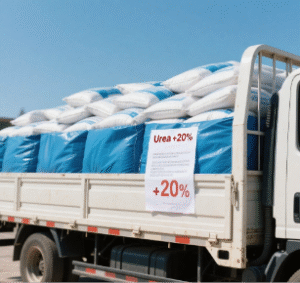
Supply side: Sharp rises in raw material costs have pushed compound fertilizer production costs higher. Urea guidance prices have increased by RMB 120–300/ton, while phosphate ammonium guidance prices have risen by RMB 200–400/ton. Ammonium chloride and potash prices remain stable for now, but overall cost pressure on producers has increased significantly.
Demand side: Rising costs have improved downstream stocking sentiment. Some high-phosphorus and balanced fertilizer products have seen price increases compared to earlier periods, with lower-priced market offers noticeably reduced.
Outlook: Market participants are closely watching sulfur and phosphate price trends and new producer pricing policies. Compound fertilizer markets are expected to maintain firm conditions in the near term.
Phosphate Fertilizers
Monoammonium Phosphate (MAP)
MAP markets continued to show firm strength, with producers primarily executing previously booked orders. In Central China, ex-works offers for 55% powder grade have adjusted upward in line with guidance prices, with traders maintaining firm sentiment and transactions negotiated on a case-by-case basis.
Supply side: Cost pressures remain elevated. Although sulfur prices have seen a rational pullback, low port inventories continue to provide support. Sulfuric acid remains range-bound at high levels, phosphate rock stays firm, and producers have limited willingness to reduce prices.
Demand side: Summer fertilizer application is winding down, while autumn stockpiling has not yet begun in earnest. Compound fertilizer plants are running at low utilization rates, with downstream buyers largely on the sidelines and purchasing only as needed.
Outlook: Supported by costs and relatively tight supply, MAP is expected to maintain high-level firm operation in the short term. Key factors to watch include sulfur price trends, the pace of autumn preparation, and the transmission of cost impacts following the U.S.-Iran agreement.
Regional MAP quotes (55% powder, delivered, RMB/ton):
| Region | Price Range | Change |
|---|---|---|
| Anhui | 4,400–4,500 | Steady |
| Northeast China | ~4,250 | Steady |
| Henan | 4,500–4,550 | Steady |
| Hubei (ex-works) | 4,200–4,450 | Steady |
| Jiangsu | ~4,500 | Steady |
| Shandong | 4,530–4,500 | Steady |
| Sichuan | ~4,150 | Steady |
| Yunnan (ex-works) | 4,200–4,250 | Steady |
(Note: Some regional prices listed reflect market delivered offers; variations are due to local conditions.)
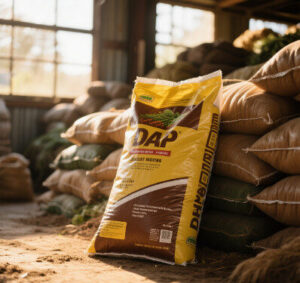
Diammonium Phosphate (DAP)
DAP markets remained firm with a wait-and-see tone. Producers continue to ship previously booked orders, with transactions negotiated individually. Overall market activity remained subdued.
Supply side: Raw material prices remain elevated. While sulfur has eased slightly, low port inventories continue to underpin prices. Sulfuric acid holds at high levels, phosphate rock remains firm, and production costs continue to pressure producers, leaving limited room for price cuts.
Demand side: The market is in a traditional consumption lull. Autumn stockpiling has not yet started, and compound fertilizer plants maintain low operating rates. Downstream buyers are making only occasional spot purchases, with grassroots distributors largely on the sidelines.
Outlook: DAP prices are expected to continue in a consolidation pattern as cost support and weak demand contend. Market attention will focus on raw material price movements, the pace of autumn preparations, and export policy adjustments.
Regional DAP quotes (RMB/ton):
| Region | Grade | Price Range | Change |
|---|---|---|---|
| Shaanxi (ex-works) | 60% | 4,300–4,350 | Steady |
| Northeast (ex-works) | 64% | 4,550–4,600 | Steady |
| Hebei (self-pickup) | 57% | 4,300–4,500 | ↑ Higher |
| Hubei (ex-works) | 64% | 4,400–4,450 | Steady |
| Shandong (warehouse) | 64% | 4,750–4,950 | ↑ Higher |
| Shandong (station) | 57% | 4,350–4,455 | ↑ Higher |
Potash Fertilizers
Potassium Chloride (MOP)
MOP prices edged down slightly, but the pace of decline has slowed. Traders—facing limited supplies, quiet demand, and slightly improved autumn buying sentiment—have begun to hold prices steady. However, port inventories have climbed to 2.60–2.65 million tons, maintaining significant supply pressure. The short-term outlook remains weak and stable.
Quotes (RMB/ton):
| Grade/Origin | Price Range |
|---|---|
| Port 62% white MOP | 3,150–3,500 |
| Port 60% red granular | 3,300–3,450 |
| Border 62% Russian white | ~3,150 |
| Qinghai 60% white (delivered) | 3,100–3,300 |
Port inventory reference: ~2.60–2.65 million tons
Potassium Sulfate (SOP)
SOP prices remained stable. Although sulfur prices have fallen, sulfuric acid has not declined, and MOP price drops remain limited. Cost support therefore continues to underpin the market. Some regional offers have edged up in trial moves. The short-term outlook is steady, with no significant downside—and some local upward试探.
Quotes (RMB/ton):
| Type | Price Range |
|---|---|
| Processed 52% full-water-soluble powder (ex-works) | 4,300–4,350 |
| Resource-based 50% powder (delivered) | 3,850–3,900 |
| Processed SOP operating rate | ~40–45% |
Summary
-
Compound fertilizers remain firm, supported by rising feedstock costs and improving downstream sentiment, with lower-tier market offers shrinking.
-
MAP maintains high-level firmness with cost support and tight supply, though demand remains subdued.
-
DAP is in a wait-and-see consolidation, balancing strong cost support against weak seasonal demand.
-
MOP continues its weak but slowing decline, with rising port inventories capping any meaningful rebound.
-
SOP holds steady, with mild upward tests in some areas due to resilient cost support.
Key factors to monitor in the coming weeks:
-
Sulfur and phosphate rock price trends
-
Pace of autumn stockpile preparation
-
Impact of the U.S.-Iran agreement on global raw material costs
-
Any adjustments to China’s export policies for phosphate fertilizers